
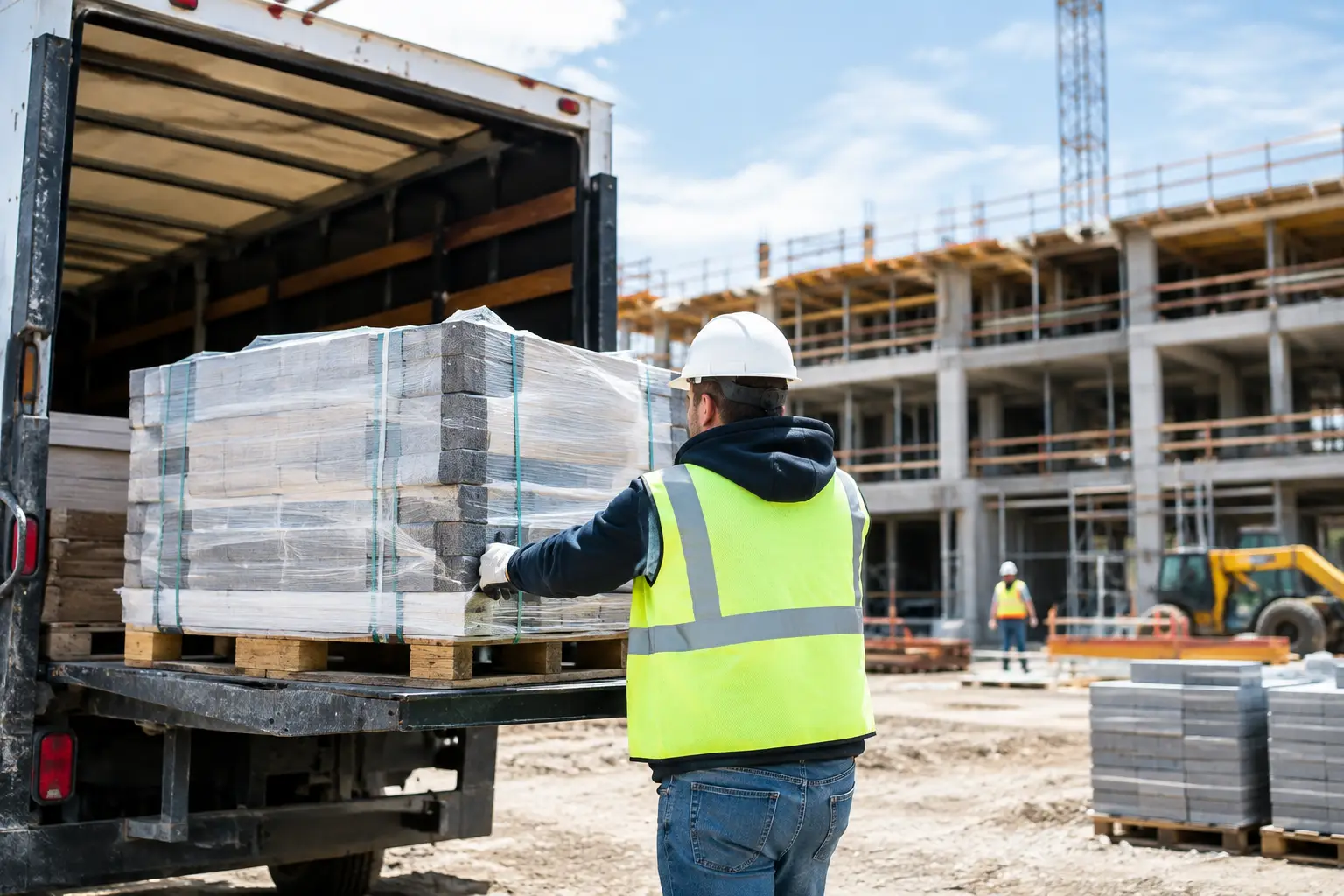
A missed delivery at a jobsite rarely affects just one load. It can leave installers waiting, equipment idle, a crane booking wasted, or an entire trade sequence pushed back. The best delivery options for jobsites are the ones that match the freight, site conditions, unloading resources, and delivery window before the truck is dispatched.
For construction suppliers, manufacturers, distributors, and project teams, jobsite delivery is not simply freight transportation. It is coordinated execution at a location where access can change by the hour. The right transportation plan accounts for more than mileage and rate. It considers equipment type, delivery appointments, driver instructions, material handling requirements, and the consequences of arriving too early or too late.
What Makes a Jobsite Delivery Different?
A distribution center is designed to receive freight. It has defined docks, scheduled labor, fixed operating hours, and usually a clear process for checking in a driver. Jobsites often have none of those advantages.
A delivery may need to enter through a temporary gate, follow a designated traffic route, avoid active excavation, and check in with a site superintendent before unloading. Space may be limited. A forklift may be shared between crews. Weather, road restrictions, and changing construction schedules can all affect the delivery plan.
That is why a standard truckload quote is not enough. Shippers need to communicate the shipment's dimensions, weight, packaging, unloading method, jobsite contact, required delivery date, and site restrictions. Freight providers need to turn that information into the correct equipment and service model.
Best Delivery Options for Jobsites
There is no single best method for every site. The right option depends on the product being delivered and the level of handling required at the destination.
Flatbed Delivery for Accessible Materials
Flatbeds are a practical choice for freight that can be loaded and unloaded from the side or overhead. They are commonly used for lumber, steel, roofing materials, precast components, building products, machinery, and palletized freight that requires forklift or crane access.
Their main advantage is accessibility. A jobsite forklift, telehandler, crane, or loading crew can reach the freight without the walls of an enclosed trailer getting in the way. Flatbeds also support longer or wider materials that may not fit efficiently in a dry van.
The trade-off is exposure. Freight must be properly secured and, when needed, protected from rain, road spray, or debris. The shipper also needs to confirm that the site has safe unloading space and qualified personnel or equipment ready when the truck arrives. Detention can become expensive when a flatbed is held because a crane operator or forklift is unavailable.
Conestoga Service When Freight Needs Protection
Conestoga trailers combine many of the loading advantages of a flatbed with the weather protection of a covered trailer. The rolling tarp system opens the side and top of the trailer, allowing forklift or crane access while keeping sensitive materials protected during transit.
This option works well for construction materials, fabricated metal, machinery, finished products, and other freight that should not travel exposed to the elements. It can be particularly useful for deliveries across Canada and the United States where changing weather conditions are a routine planning factor.
A Conestoga is not necessary for every load. If the material can safely move on an open deck and the jobsite can unload quickly, a standard flatbed may be the more efficient choice. But for weather-sensitive freight requiring side access, it can reduce handling compromises.
Straight Truck and Final-Mile Delivery for Tight Sites
Large tractor-trailers are efficient for high-volume freight, but they are not always practical at an urban construction site, a restricted commercial property, or a location with narrow access roads. Straight trucks can provide a better fit where turning radius, parking restrictions, or site congestion limit the use of a full-size combination unit.
Straight truck delivery is often used for smaller jobsite orders, replacement materials, tools, fixtures, and time-sensitive product deliveries. Depending on the freight and service arrangement, final-mile delivery may also include liftgate capability, inside placement, scheduled appointments, or other handling support.
A liftgate is useful when the receiving site does not have a dock or forklift, but it has limits. Heavy, oversized, long, or unstable freight may require different equipment and a safer unloading plan. A liftgate should be treated as a material-handling tool, not a substitute for confirming the actual weight, dimensions, and site conditions.
Dedicated Transportation for Scheduled Project Flow
For projects with repeated deliveries, dedicated transportation can create more control than sourcing capacity shipment by shipment. A dedicated truck and driver arrangement may support daily material runs, multi-stop routes, recurring deliveries from a supplier to several active sites, or a consistent lane between a manufacturing facility and a project location.
The value is operational consistency. The transportation team becomes familiar with site contacts, delivery procedures, product requirements, and common access issues. That familiarity can reduce communication gaps and improve schedule reliability, especially when shipments are tied to a tight construction sequence.
Dedicated service makes the most sense when freight volume is predictable enough to use the capacity regularly. For occasional or highly variable deliveries, a brokerage solution with access to multiple equipment types may offer greater flexibility.
Specialized and Oversized Freight for Complex Deliveries
Some deliveries cannot be managed with standard equipment. Structural components, industrial equipment, generators, large HVAC units, tanks, and project-specific machinery may require oversized permits, specialized trailers, routing reviews, escorts, or coordinated crane appointments.
These moves need early planning. Dimensions and weight affect more than trailer selection. They can determine which roads are available, whether permits are required, when the load can travel, and how the material can safely enter the site. A delivery date is only one part of the plan.
For complex freight, the best practice is to involve transportation coordination before the product is ready to ship. Early review gives the logistics team time to secure suitable equipment, identify route constraints, and align arrival with the unloading operation.
Build the Delivery Plan Around the Site
The most dependable jobsite deliveries begin with complete instructions. A bill of lading and street address are not enough when the receiver is working behind temporary fencing or operating under a controlled delivery schedule.
Provide a direct site contact who can answer the phone when the driver arrives. Confirm gate access, delivery hours, required personal protective equipment, check-in procedures, unloading equipment, and whether the driver must wait for an escort. If the delivery is appointment-based, clarify whether the appointment means arrival at the gate, check-in with site personnel, or a specific unloading time.
It also helps to identify the freight's priority. Is the load required for the next morning's installation? Can it be delivered a day early and staged securely? Does it need to arrive after another trade clears space? These details influence whether a standard delivery, appointment service, dedicated truck, or final-mile solution is the right fit.
Avoid Common Jobsite Delivery Failures
Many delivery problems are preventable. The most common issue is assuming the site can unload any truck that arrives. Equipment availability, site congestion, and crew readiness should be confirmed before dispatch.
Another frequent problem is incomplete freight information. A shipment described as standard palletized freight may actually include overlength pieces, unstackable crates, or material that cannot be lifted safely from the trailer. Accurate dimensions, weights, and packaging details protect both the schedule and the freight.
Finally, avoid treating communication as an afterthought. Site plans change. When an access road closes, a crane schedule shifts, or a receiver is unavailable, fast communication between the shipper, carrier, and jobsite contact can prevent a failed delivery or extended detention.
Choose Capacity That Matches the Consequences
The lowest transportation rate is not always the lowest project cost. If a late or failed delivery delays labor, rental equipment, or critical-path work, the freight decision should be evaluated against the operational impact rather than line-haul cost alone.
Midemide Logistics helps commercial shippers coordinate flatbed, Conestoga, straight truck, final-mile, dedicated, and specialized freight services across U.S. and Canadian lanes. The goal is to align the equipment and delivery model with the conditions waiting at the jobsite.
When a delivery is tied to active work, plan it as part of the project schedule. Confirm the freight, confirm the site, confirm the unloading plan, and use transportation capacity that can execute the delivery as expected.