
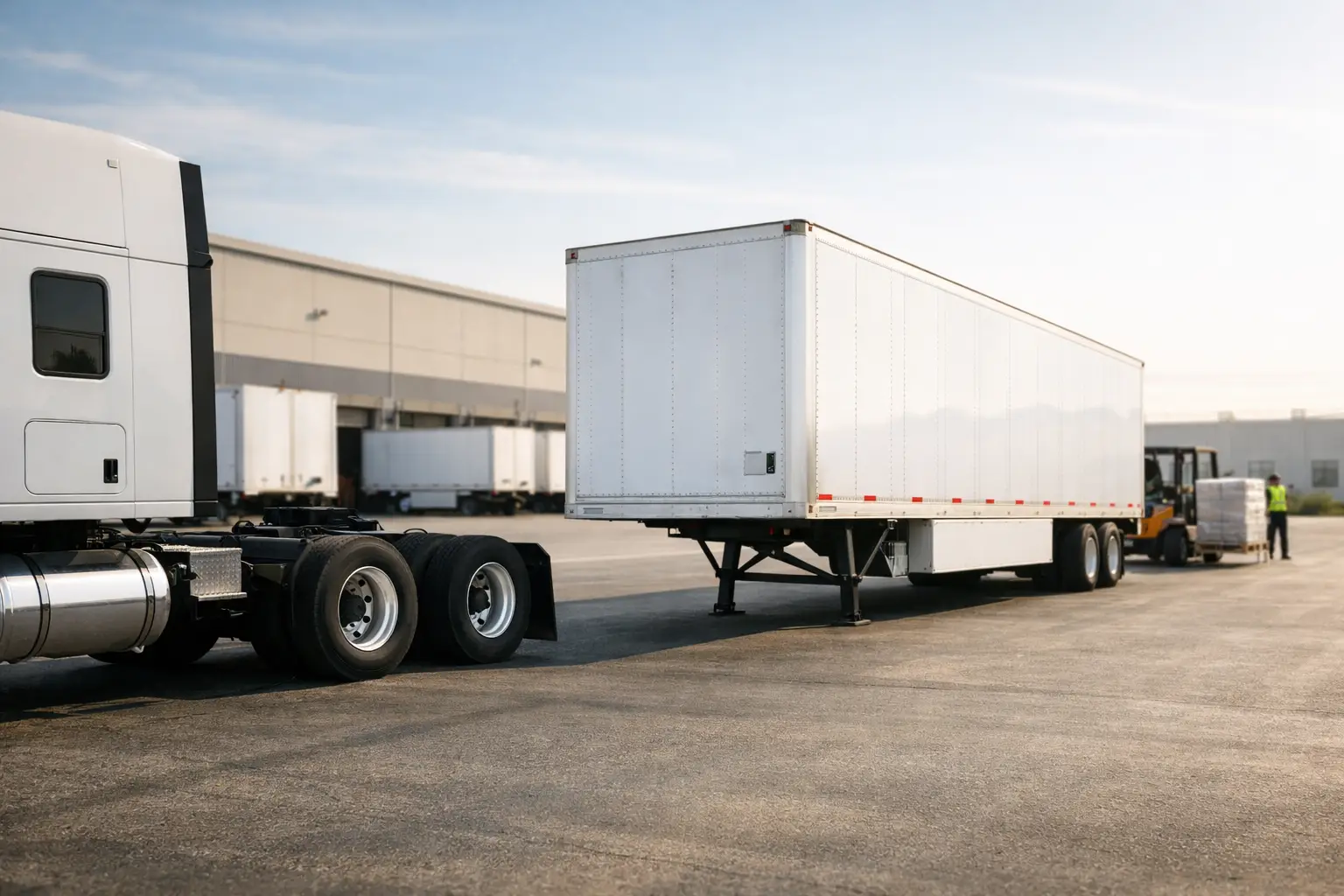
A full trailer waiting at your facility can be more valuable than a truck waiting at your dock. That is the operating logic behind drop trailer benefits: freight can be loaded or unloaded on your schedule, while the carrier’s tractor remains available to keep moving. For high-volume shippers, that change can reduce dock pressure, support production continuity, and make outbound freight planning more predictable.
A drop trailer program is not the right fit for every lane or every shipment. It requires sufficient freight density, trailer space, and disciplined coordination. When the operating conditions are right, however, it can be a practical way to separate loading time from driving time.
What Is a Drop Trailer Program?
In a standard live-load arrangement, a driver arrives, waits while freight is loaded or unloaded, then departs with the trailer. Every delay at the dock ties up both the trailer and the tractor. If an appointment runs long, the impact can extend to the driver’s available hours, subsequent pickups, and delivery commitments.
With a drop trailer arrangement, the carrier leaves an empty trailer at the shipper’s facility. The shipper loads it when labor, inventory, and dock capacity allow. Once it is ready, the carrier returns to exchange the loaded unit for another empty trailer or schedules pickup based on the agreed service plan. The same model can work in reverse for inbound freight, allowing a consignee to unload without holding the driver at the dock.
The trailer becomes a temporary freight buffer. That buffer is often the difference between a shipping department reacting to daily disruptions and operating to a planned rhythm.
Drop Trailer Benefits That Improve Freight Flow
The primary value of a drop trailer program is operational control. Instead of matching every loading activity to a driver’s arrival window, your team can manage freight around warehouse priorities and carrier pickup schedules.
Less dock congestion and fewer loading bottlenecks
Facilities with tight dock schedules often face competing demands. Inbound materials may need to be received while outbound orders are staged, production is calling for components, and a driver is waiting for a door. A dropped trailer gives the warehouse more flexibility to work the load when a door, forklift operator, and product are available.
This can be especially useful for manufacturers that release finished goods in batches or distributors that build mixed customer orders throughout the day. Freight can be loaded incrementally rather than rushed during a short live-load appointment. The result is a cleaner handoff and less pressure on warehouse labor.
Better use of driver time and available capacity
Driver detention is not only a cost concern. It is a capacity concern. A tractor sitting at a facility for hours is not covering another pickup, progressing toward delivery, or helping the carrier maintain a dependable network.
Drop-and-hook operations reduce the amount of non-driving time associated with the shipment. This helps carriers plan equipment turns more efficiently and can make a lane more attractive when capacity is constrained. For shippers, that can translate into more consistent service, particularly on recurring freight moves.
The benefit depends on execution. If loaded trailers are not released when expected, or empty units sit for extended periods without a clear plan, the equipment advantage is reduced. A successful program needs agreed turnaround expectations and clear communication when volume changes.
More reliable shipping windows
Live loads are vulnerable to small disruptions. A late production run, a delayed inbound component, an inventory discrepancy, or a labor shortage can cause a missed pickup. With a trailer already on site, the warehouse has more room to absorb those issues without immediately affecting the carrier’s schedule.
That flexibility matters for businesses shipping to retailers, distribution centers, job sites, or customers with firm receiving appointments. A load can be prepared ahead of its pickup window, verified, sealed, and ready to move when the tractor arrives. This supports more dependable departure times and reduces last-minute freight decisions.
Support for production and inventory cycles
Drop trailers are often useful when shipping activity does not follow a steady hourly pattern. A plant may complete a production run late in the day. A wholesaler may pick orders overnight for next-day movement. A retailer may receive seasonal inventory in concentrated waves.
In these situations, keeping equipment on site provides staging capacity close to the point of shipment. Freight does not need to occupy valuable floor space while waiting for a live pickup, and teams can build loads in sequence rather than moving product multiple times. For facilities with limited warehouse space, that can improve internal material flow as well as outbound execution.
Potentially lower accessorial exposure
When a carrier must wait beyond the free loading or unloading time, detention charges may apply. A drop trailer strategy can reduce dependence on long live-load windows and the risk of repeated detention events.
This is not a guarantee of lower transportation cost. Trailer pools, extended dwell time, equipment positioning, and lane imbalances can all carry costs. The financial case should be evaluated against total operating impact: labor efficiency, missed-pickup risk, storage pressure, detention history, and service performance. In many cases, the value comes from avoiding disruption rather than simply reducing the rate per load.
Where Drop Trailer Programs Work Best
Drop trailer service is strongest on consistent lanes with regular volume. A shipper moving several full truckloads each week between the same origin and destination has a clearer equipment cycle than a business shipping occasional one-off loads.
It can be a good fit for manufacturers with planned outbound production, distributors with recurring replenishment freight, and retailers moving scheduled inventory to regional facilities. Dedicated transportation programs are another natural setting because the assigned equipment and operating schedule can be aligned to the facility’s workflow.
Cross-border freight can also benefit from trailer drops when the underlying process is well controlled. Shippers moving between Canada and the United States should account for customs documentation, border timing, and shipment release requirements before treating a loaded trailer as ready for dispatch. The trailer may be staged at the facility, but the paperwork still needs to be accurate and available before the freight begins its cross-border move.
The model is less effective for highly irregular lanes, facilities with no secure trailer parking, or shipments that require immediate handling. Specialized, oversized, flatbed, or Conestoga freight may also require a different approach because equipment availability, loading conditions, and securement needs are more specific.
What to Plan Before Using Dropped Equipment
A drop trailer program should be designed as an operating process, not treated as extra parking. Before placing equipment, shippers and logistics providers should agree on trailer quantities, pickup frequency, dwell expectations, and escalation contacts. The goal is to keep trailers circulating, not accumulating.
Facility readiness matters. Confirm that the yard has room for safe maneuvering, that trailers can be secured, and that dock assignments are workable. Warehouse teams should know how loads will be staged, when seals are applied, who verifies shipping documents, and how a trailer is marked as ready for pickup.
Visibility is equally important. The carrier or logistics partner needs timely status updates on empty equipment, loading progress, ready times, and freight exceptions. If a planned load will not be ready, early notice provides more options than a call after the scheduled exchange has failed.
A simple scorecard can help determine whether the arrangement is producing the expected value. Track trailer dwell time, pickup reliability, detention events, load-ready accuracy, and damage or shortage claims. These measurements show whether the program is improving execution or simply moving congestion from the dock to the yard.
Choosing the Right Operating Model
The best drop trailer setup is based on actual freight behavior. A high-volume facility may need a standing pool of trailers and daily exchanges. A lower-volume shipper may only need equipment dropped ahead of planned production days. Some operations benefit from a dedicated trailer arrangement, while others need flexible brokerage capacity that can adjust with seasonal demand.
The provider’s equipment access and communication process are central to the result. A logistics partner should be able to coordinate capacity, monitor trailer turns, and respond when a facility’s shipping plan changes. For shippers operating across domestic and cross-border lanes, that coordination should also account for appointment requirements, documentation, and equipment type.
Midemide Logistics helps commercial shippers evaluate transportation models based on lane requirements, freight volume, and facility operations. The objective is not to add trailers for their own sake. It is to create an equipment cycle that supports dependable pickup and delivery performance.
A drop trailer program earns its place when it gives your warehouse time to do the work correctly without slowing freight movement. Start with one repeatable lane, define the trailer-turn expectations, and let the operating results determine whether the model should expand.