
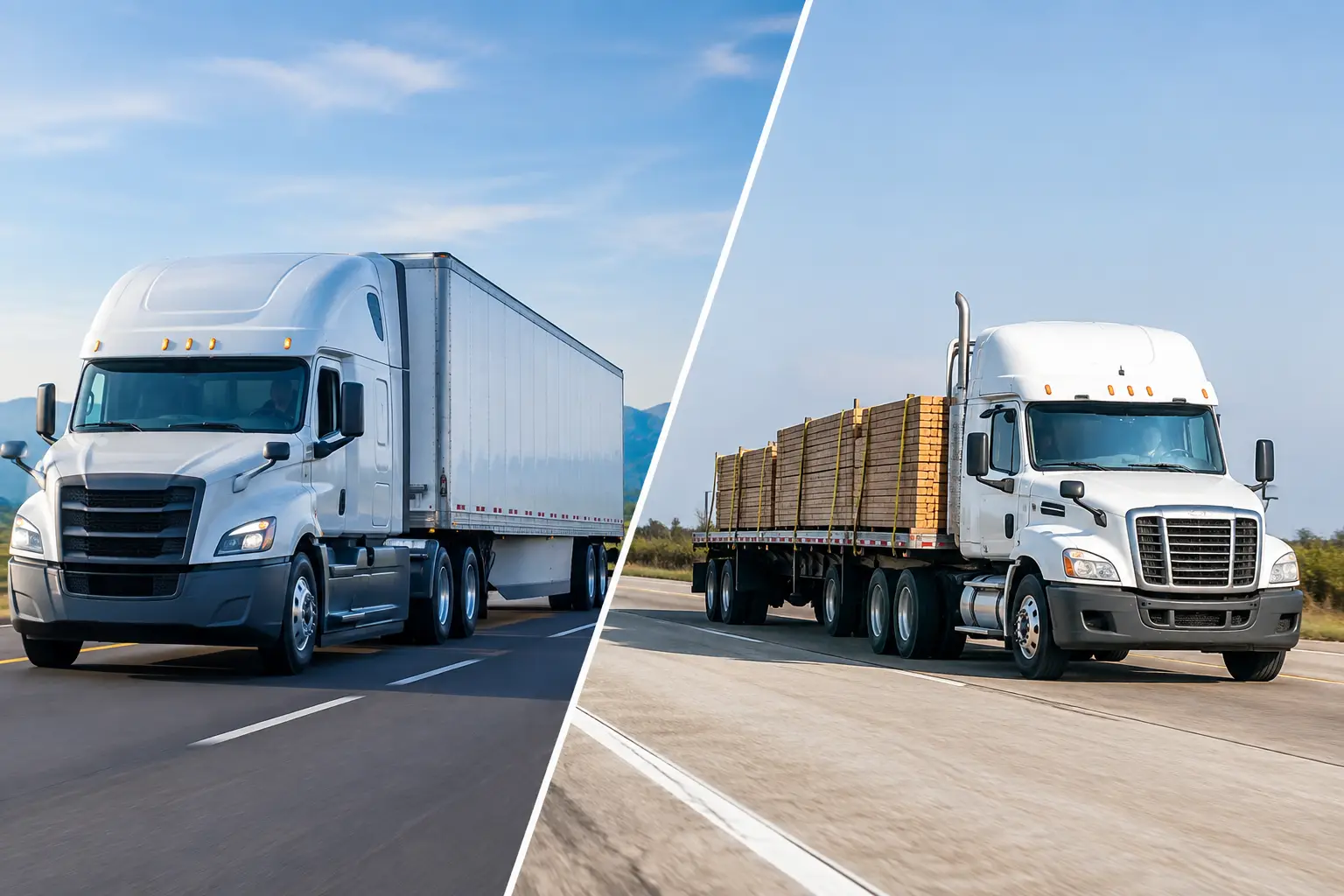
A shipment can be fully packaged, correctly classified, and ready at the dock, then still miss its delivery window because the trailer type was wrong. The dry van versus flatbed decision affects how freight is loaded, protected, secured, priced, and received. For manufacturers, distributors, construction suppliers, and industrial shippers, selecting the right equipment at the planning stage prevents avoidable handling issues, capacity delays, and accessorial charges.
The best option depends on the freight itself, the pickup and delivery environment, and the level of protection required in transit. Dry vans are the standard choice for enclosed, palletized freight. Flatbeds are built for freight that is oversized, difficult to load through a dock door, or better handled by crane or forklift from the side. Neither is automatically better. The operational requirement should drive the equipment selection.
Dry Van Versus Flatbed: The Core Difference
A dry van is an enclosed trailer, most commonly 53 feet long, with solid walls, a roof, and rear doors. It protects freight from rain, snow, road debris, and most outside visibility. Standard dry van freight typically includes palletized consumer goods, boxed products, food and beverage items that do not require temperature control, automotive parts, retail inventory, and general manufactured products.
A flatbed is an open-deck trailer with no walls or roof. Its design allows freight to be loaded from the rear, either side, or above. This makes it a practical fit for steel, lumber, machinery, construction materials, industrial components, crated equipment, and other freight that does not fit inside an enclosed trailer or cannot be loaded at a conventional dock.
The distinction is simple, but the planning implications are not. A dry van shipment often relies on dock access and a pallet jack or forklift. A flatbed shipment may require loading equipment, securement materials, tarps, permits, or delivery appointments that account for crane time and jobsite conditions.
When a Dry Van Is the Better Freight Option
Dry vans are widely available across North American freight lanes, making them a dependable and efficient choice for standard commercial shipments. If freight can be loaded through rear doors, fits within interior dimensions, and needs protection from weather, a dry van is usually the first equipment type to consider.
The enclosed trailer reduces exposure during long-distance moves and cross-border transportation. That matters for packaged inventory, finished goods, electronics, paper products, and products with labels, cartons, or wrapping that can be damaged by moisture. It also provides more control for freight that should not be visible at fuel stops, yards, or delivery locations.
Dry van shipping is typically easier to plan when both locations have dock-height doors. A facility can load and unload quickly without arranging cranes, ramps, or specialized material-handling equipment. For recurring lanes, this can support more predictable transit planning and lower operating friction.
However, dry vans have clear physical limits. Freight must fit through the rear opening and within the trailer's interior height and width. A product may be under the weight limit yet still be unsuitable if it is too tall, too wide, too long, or too difficult to maneuver inside. Floor space also matters. Freight that cannot be safely blocked, braced, or secured in an enclosed trailer may require a different solution.
When a Flatbed Is the Better Freight Option
Flatbeds solve access and dimension problems that dry vans cannot. The open deck provides room for forklifts to approach from either side and permits overhead loading by crane. This is especially useful for long, heavy, awkward, or irregularly shaped freight that would be impractical to move through rear doors.
A standard flatbed can accommodate many loads that exceed dry van width or height constraints, subject to legal dimensions and securement requirements. Equipment such as pipes, structural steel, fabricated components, agricultural machinery, building materials, and large crates often moves more efficiently on a flatbed because loading crews have full access to the freight.
The trade-off is exposure. Flatbed freight must be able to tolerate weather or be protected with tarps and proper covering. Tarps add labor, time, and cost, and they must be sized and secured correctly. Shippers should also recognize that flatbed loads require specialized securement. Chains, straps, binders, edge protection, blocking, and dunnage are not optional details. They are central to safe transport and regulatory compliance.
For freight requiring weather protection and side-loading access, a Conestoga trailer may be the right middle ground. It uses a rolling tarp system that opens the trailer side and top for loading while providing enclosed protection once the shipment is secured. Conestogas are often useful for machinery, sensitive industrial products, and freight that cannot easily be loaded into a dry van.
Compare the Loading Environment Before Booking
Equipment selection should start at the shipping and receiving locations, not only with the product dimensions. A dry van may be appropriate on paper but impractical if the receiving site has no dock and cannot unload through rear doors. Likewise, a flatbed may be necessary for loading but create delivery challenges if the consignee lacks a forklift, crane, or safe unloading area.
Before tendering a shipment, confirm four operational details:
- The freight's exact length, width, height, weight, and whether it can be stacked.
- Available loading and unloading equipment, including dock doors, forklifts, cranes, ramps, or side access.
- Packaging condition and whether the freight can withstand weather exposure or requires tarping.
- Site restrictions such as appointment rules, jobsite access, limited turning space, or required personal protective equipment.
These details allow the carrier and logistics provider to match the load with equipment that can be loaded, secured, and delivered without last-minute changes. Accurate information is particularly valuable for cross-border freight, where equipment delays can affect customs timing and delivery appointments on both sides of the border.
Cost Factors Beyond the Linehaul Rate
Comparing dry van and flatbed pricing only by the quoted linehaul rate can lead to a misleading decision. Dry van capacity is generally broader, so pricing may be more stable on common lanes. Yet a dry van that requires extensive loading time, extra handling, or a rejected delivery can become more expensive than properly planned flatbed service.
Flatbed rates reflect the equipment, driver expertise, securement work, and capacity conditions associated with open-deck freight. Costs may increase when a shipment needs tarps, oversized permits, escorts, specialized trailer types, or extended loading and unloading time. Seasonal demand can also affect availability. Construction activity, agricultural cycles, and regional weather conditions can tighten flatbed capacity in specific markets.
For either mode, the most reliable way to control cost is to provide complete shipment information before dispatch. Dimensions, weight, commodity, packaging, access requirements, and pickup readiness all influence the equipment plan. If a shipment is not ready when the truck arrives, detention and layover risk can quickly outweigh a small difference in the initial freight quote.
Safety and Compliance Require Different Planning
Both dry van and flatbed shipments require proper cargo securement, but flatbed moves demand a more visible and specialized approach. The driver must be able to inspect straps, chains, binders, and tarps throughout the trip. Load securement requirements vary by commodity, and heavy or irregular freight may need specific tie-down methods and blocking arrangements.
Dry van freight still requires attention to weight distribution and interior securement. Pallets that shift in transit can damage product, create unloading hazards, and cause claims. Shippers should ensure freight is stable, wrapped when appropriate, and loaded with enough support to prevent movement. If the freight is unusually heavy, concentrated in a small footprint, or prone to shifting, that should be communicated before equipment is assigned.
For oversized freight, the decision may extend beyond dry van or standard flatbed. Step decks, double drops, stretch trailers, and specialized equipment can address height, length, or weight requirements that a standard trailer cannot legally carry. Early planning is essential because permits and routing may be required.
Choose Equipment Around the Shipment, Not Habit
A dry van is the practical default for protected, palletized, dock-friendly freight. A flatbed is the better choice when dimensions, loading access, or the nature of the product make enclosed equipment impractical. A Conestoga can fill the gap when freight needs both open-side loading and weather protection.
Midemide Logistics helps shippers coordinate dry van, flatbed, Conestoga, and specialized transportation across the United States and Canada based on the actual demands of each shipment. The right trailer is not simply the one that is available. It is the one that allows freight to move safely, efficiently, and without creating preventable problems at either end of the route.