
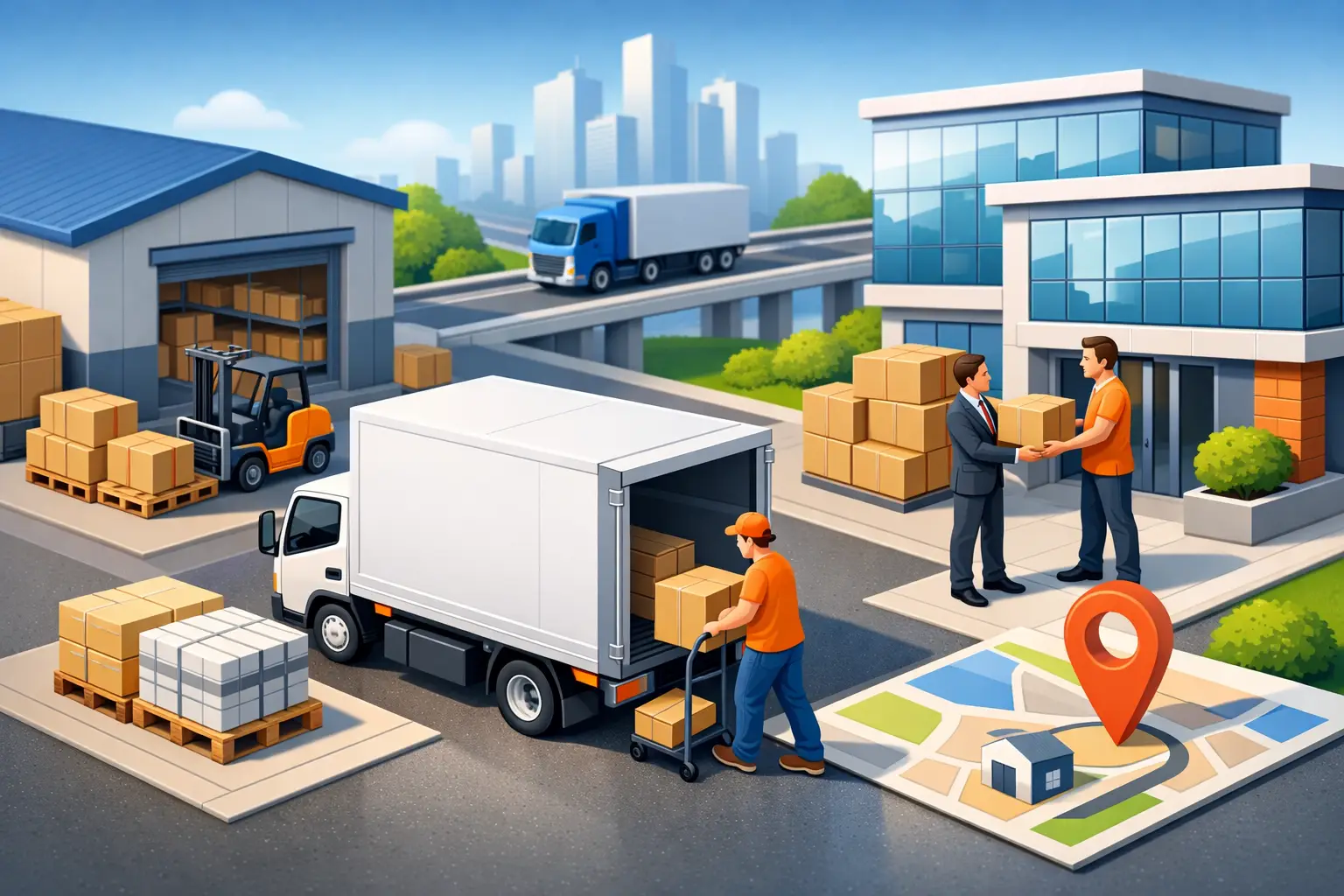
A shipment can move smoothly for 1,000 miles and still fail at the dock door. That is why final mile delivery gets so much attention from shippers managing tight delivery windows, jobsite schedules, retail appointments, and customer expectations. The last segment of a shipment is where timing, communication, site access, and service execution all come under pressure at once.
For B2B freight, final mile delivery is not just about getting a package to a doorstep. It often means coordinating deliveries to warehouses, stores, construction sites, distribution points, healthcare facilities, or commercial customers with strict receiving requirements. That changes the planning, equipment, labor, and visibility needed to complete the move successfully.
What final mile delivery means in commercial logistics
In practical terms, final mile delivery is the last handoff from a transportation network to the consignee. Depending on the shipment, that last step may cover a short urban route, a rural delivery area, or a scheduled appointment at a commercial site. It can involve liftgate service, inside delivery, white-glove handling, limited access locations, or freight that requires exact equipment placement.
For many businesses, the final mile is where freight brokerage, asset-based transportation, and on-the-ground delivery execution need to work together. A shipper may have linehaul capacity secured and tracking in place, but if the final delivery team cannot meet site requirements or communicate status clearly, service performance drops fast.
That is why the final mile should be treated as an operating function, not an afterthought. It has direct impact on OTIF performance, labor planning, customer satisfaction, and total landed transportation cost.
Why final mile delivery is harder than it looks
The final mile is often the shortest portion of the move and the most variable. Delivery sites have different access rules, appointment windows shift, receivers may have unloading constraints, and congestion adds delay even on short routes. In cross-border or multi-stop freight networks, those issues compound quickly.
A manufacturer delivering replacement equipment to a plant shutdown has one set of requirements. A distributor sending product to multiple retail locations has another. A building materials supplier delivering to active jobsites faces a different level of coordination entirely. The freight may be similar in size, but the service model is not.
This is where many shipping plans break down. Companies focus on transit time and linehaul rate, then discover the final delivery requires a different trailer type, a smaller straight truck, a driver call-ahead process, or a site-specific delivery window that was not built into the original plan.
The main cost drivers in final mile delivery
Cost in the final mile is rarely about mileage alone. Labor, dwell time, reattempts, equipment fit, and delivery exceptions often matter more than distance. A short route into a dense urban zone can cost more to execute than a longer suburban stop because of parking restrictions, appointment delays, and unloading conditions.
Equipment selection also changes the economics. If a full-size trailer cannot access the destination, the shipment may need to be transferred to a straight truck or smaller final delivery unit. That adds handling and coordination. If the freight needs a liftgate, pallet jack, or two-person delivery, the service cost rises again.
The same applies to communication. A missed appointment, an incomplete delivery instruction, or a receiver that is not ready can trigger detention, redelivery, or storage charges. In final mile operations, preventable friction is expensive.
Where B2B shippers lose control
Most final mile issues come from gaps in execution before the truck arrives. Inaccurate delivery instructions, missing site contacts, unclear access notes, and incomplete freight details create avoidable service failures. Once the truck is in route, the cost of fixing those problems goes up.
Visibility is another weak point. Basic tracking may show that a shipment is moving, but it does not always show whether the consignee confirmed the appointment, whether special handling is required, or whether the site can accept the equipment assigned. For operations teams, that missing context is what creates fire drills.
Carrier coordination matters just as much. If linehaul and final delivery are managed by separate providers without clear handoff procedures, accountability gets blurred. Shippers then spend time chasing updates instead of managing freight flow.
How to improve final mile delivery performance
The first step is to define the delivery requirement at order entry, not after dispatch. That means capturing the consignee’s receiving hours, site restrictions, unloading method, appointment process, and any special handling needs before a truck is assigned. Good final mile performance starts with accurate shipment setup.
The second step is matching equipment to delivery conditions. A dry van may work for long-haul transport, but the final stop may require a straight truck, liftgate, flatbed, or specialized equipment. If freight needs to move into a congested downtown site, a retail receiving area, or a construction project, route and equipment planning should reflect that from the beginning.
Communication should be structured, not informal. Delivery appointments, call-ahead procedures, arrival status, and exception reporting need to be defined clearly. The closer the delivery gets to the consignee, the more important proactive updates become. That is especially true when freight is time-sensitive or tied to production schedules.
Finally, shippers need a delivery partner that can manage exceptions quickly. Delays happen. Sites refuse freight. Access conditions change. A practical final mile strategy is not built on the idea that every run will go exactly to plan. It is built on the ability to adjust without losing control of the shipment.
Final mile delivery in cross-border freight
Cross-border freight adds another layer of complexity. A shipment moving between the United States and Canada may clear the border efficiently and still face final delivery issues tied to appointment scheduling, local equipment availability, or regional service coverage. Customs clearance is only one part of successful execution.
Commercial shippers moving freight across the border often need one provider that can coordinate the linehaul, handoff, equipment needs, and final delivery requirements under a single operating plan. That matters when the shipment includes specialized freight, tight receiving windows, or multiple service points.
For businesses with regular cross-border moves, consistency matters more than isolated delivery speed. A dependable process for pickup, documentation, transit visibility, border coordination, and final-mile execution reduces operational noise across the entire freight network.
When dedicated support makes more sense
Not every final mile network should be handled the same way. For some shippers, ad hoc capacity works well enough. For others, especially those with recurring routes, site-specific requirements, or sensitive delivery windows, a dedicated or semi-dedicated model can produce better results.
Dedicated support improves familiarity with consignee locations, delivery patterns, and handling expectations. It can also reduce service variation when freight moves into difficult sites or high-value commercial accounts. The trade-off is flexibility. Dedicated capacity may not fit every volume profile, particularly if shipment flow changes week to week.
That is why the right answer depends on the freight mix, destination profile, and service expectations. A shipper with frequent store deliveries has a different need than an industrial company moving occasional replacement parts or oversized equipment. Final mile planning should follow the actual operating environment, not a generic template.
What to look for in a final mile logistics partner
A capable provider should understand more than transportation rates. The real question is whether they can execute the delivery model your freight requires. That includes equipment access, appointment management, communication discipline, exception response, and coverage across the lanes you ship most often.
For many B2B shippers, the strongest setup is a partner that can combine brokerage reach with asset-based support. That structure gives you access to broader capacity while improving control where service consistency matters most. Midemide Logistics operates in that model, which is especially useful for businesses managing standard freight alongside specialized or final-mile requirements.
The goal is simple. Reduce handoff risk, improve delivery reliability, and give operations teams clearer visibility from dispatch through final receipt.
Final mile delivery is where service promises become operating results. When the last segment is planned with the same discipline as the rest of the route, deliveries arrive with fewer surprises, fewer delays, and less drain on your team’s time. For shippers moving commercial freight across the US and Canada, that is not a small gain. It is a practical advantage that shows up in daily performance.