
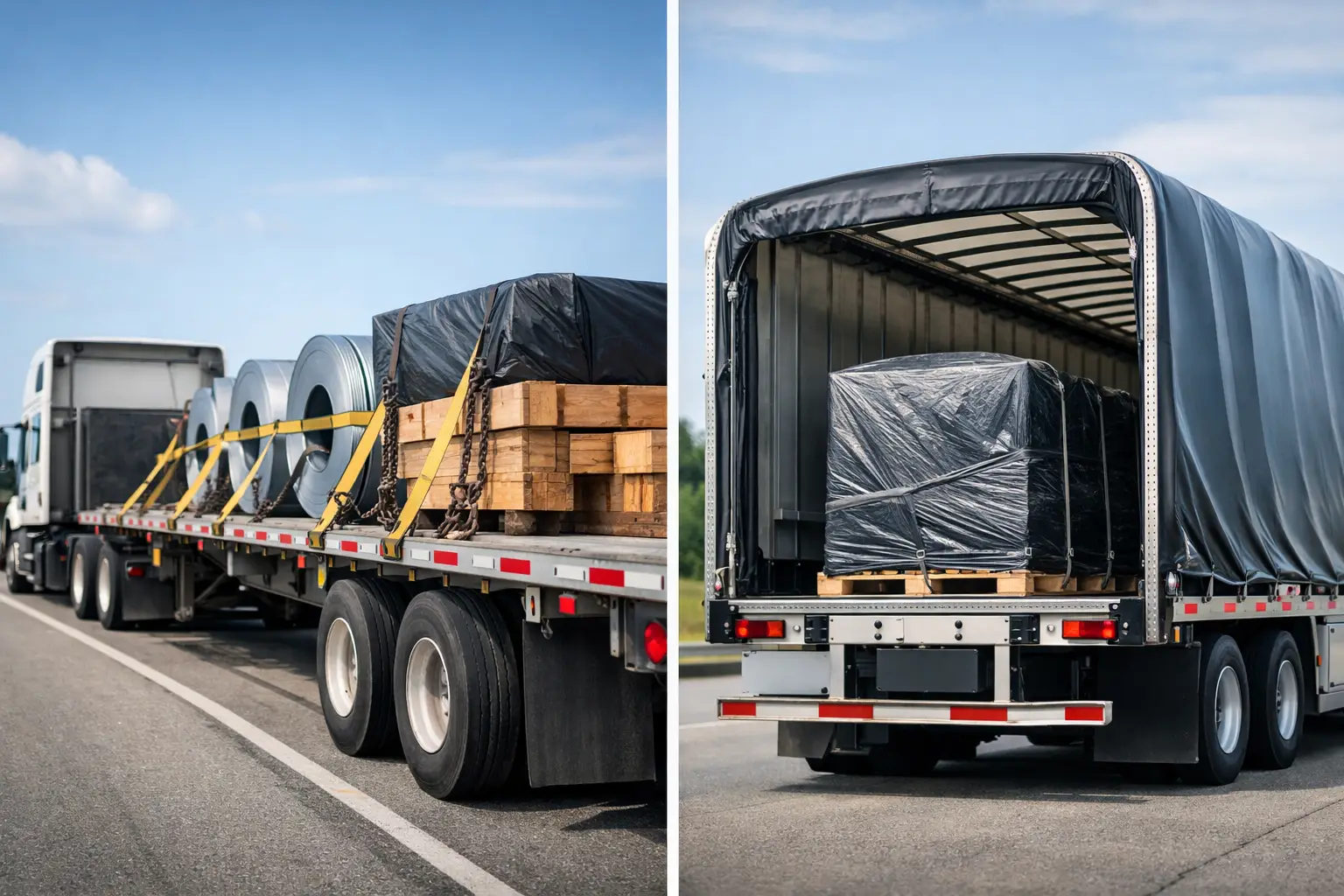
A shipment can be properly priced, scheduled, and documented, then still face a preventable problem at pickup because the trailer does not match the freight. That is the real decision behind flatbed vs Conestoga shipping. Both equipment types handle freight that may be difficult to load into a standard dry van, but they solve different operating problems.
For manufacturers, construction suppliers, machinery distributors, and industrial shippers, the choice affects more than freight cost. It influences loading time, cargo protection, securement requirements, carrier availability, and the risk of delay at the dock or jobsite. The right trailer is the one that accommodates the freight's dimensions and handling needs without adding unnecessary equipment cost or exposure.
Flatbed vs Conestoga Shipping: The Core Difference
A flatbed is an open-deck trailer with no walls or roof. Freight can be loaded from the side, rear, or above by forklift, crane, or other lifting equipment. This access makes flatbeds a practical choice for heavy machinery, steel, lumber, fabricated components, building materials, and freight that exceeds the height or width limits of enclosed equipment.
A Conestoga trailer uses a sliding tarp system mounted on a flatbed-style frame. When the tarp is opened, the trailer can provide side and overhead loading access similar to a flatbed. Once closed, it protects freight from rain, snow, road spray, and debris. It is often selected when cargo needs open-deck loading flexibility but cannot safely travel exposed to the elements.
The distinction is straightforward: a flatbed maximizes access and dimensional flexibility, while a Conestoga adds weather protection. The operational details, however, determine which option performs better for a specific load.
When a Flatbed Is the Better Freight Option
Flatbeds are generally the first choice when freight is oversized, unusually shaped, very heavy, or needs unrestricted loading access. A crane can place equipment directly onto the deck. A forklift can load long bundles from the side. Crews can secure cargo with chains, straps, edge protection, and other required equipment without working around a trailer enclosure.
This equipment is particularly effective for loads that are too tall for a Conestoga frame or tarp system. Large machinery, structural steel, precast materials, pipe, industrial skids, and construction products may require open-deck clearance. If the shipment is overwidth, overheight, or requires permits, a flatbed can also provide more options for planning the move with the appropriate specialized trailer.
Flatbeds are not automatically the lowest-cost option. Open-deck capacity can tighten during seasonal construction demand, and the shipment may require tarps, additional securement, or specialized handling. Those requirements can affect both rate and transit planning. Still, a flatbed is often the most efficient option when forcing the freight into enclosed equipment would create loading delays, damage risk, or compliance concerns.
Flatbed considerations before booking
Weather exposure is the most obvious trade-off. Some freight can travel uncovered without issue, while other products may rust, stain, absorb moisture, or suffer packaging damage. Tarps can protect many loads, but tarping is not identical to a fully enclosed environment. It adds labor, may not suit every cargo shape, and must be planned in advance.
Shippers should also confirm the loading method, freight dimensions, weight, center of gravity, and available securement points. A load that is difficult to secure can become a safety issue or require a different trailer configuration. Accurate shipment details help prevent rejected pickups and last-minute equipment changes.
When a Conestoga Is the Better Freight Option
A Conestoga is a strong fit for freight that needs protection from weather but still benefits from side or top loading. Common examples include palletized industrial goods, machinery components, crated products, metal products vulnerable to moisture, building materials, and high-value freight that should not be exposed during transit.
For many shippers, the practical advantage is reduced handling around tarps. Instead of manually tarping an irregular load, the driver can open the Conestoga system for loading and secure the cover after the freight is properly tied down. This can improve pickup and delivery efficiency, particularly where docks are not available or where side loading is required.
Conestoga trailers can also help protect a shipment's packaging and presentation. This matters when freight moves to a distributor, retail location, customer facility, or jobsite where wet cartons, dirty wrapping, or road debris can lead to refused product or claims. The tarp enclosure does not eliminate the need for proper securement, but it adds a valuable layer of protection.
The limitation is internal clearance. Although a Conestoga provides flatbed-style access when open, the frame, tarp system, and roof structure create dimensional limits that an open flatbed does not have. Freight height, width, and loading method must be checked carefully. A shipment that barely fits on paper may not load safely or leave sufficient clearance for transport.
Cost, Capacity, and Transit: What Actually Changes?
The rate difference between flatbed and Conestoga equipment depends on the lane, season, freight profile, and available capacity. A Conestoga may carry a premium because it combines open-deck loading access with cargo protection. On the other hand, using a flatbed plus tarps and additional labor can narrow or reverse that difference.
Capacity should be evaluated early, especially for recurring shipments or time-sensitive production schedules. A shipper moving standard palletized freight may find dry van capacity easier to source in some markets, while a shipment requiring side loading narrows the equipment pool. For open-deck moves, the best planning approach is to define the required trailer type before requesting rates rather than selecting equipment based solely on the lowest initial quote.
Transit time is usually more dependent on lane conditions, driver availability, border requirements, appointment windows, and loading readiness than on whether the trailer is a flatbed or Conestoga. However, equipment mismatch can create delays. If the shipper expects overhead loading but the consignee can only unload from the side, or if the freight arrives without the required tarp protection, the truck may be turned away or held until a solution is arranged.
Cross-Border Planning for Open-Deck Freight
For freight moving between Canada and the United States, the equipment choice does not change the underlying customs process, but it can affect execution at both ends of the shipment. Freight must be properly packaged, secured, and accompanied by complete commercial documentation before the truck reaches the border. An avoidable rework issue at pickup can place a time-sensitive cross-border shipment behind schedule.
Weather exposure deserves additional attention on long cross-border lanes. A load leaving Southern Ontario for Tennessee, Atlanta, Texas, or Missouri may encounter significantly different weather conditions during the same trip. If the product is susceptible to moisture or contamination, a Conestoga may offer better protection than a tarped flatbed. If the cargo requires crane loading, unusual clearance, or permit planning, a flatbed or specialized open-deck option may be necessary instead.
Cross-border freight also benefits from clear handoff details. Confirm who loads and unloads the shipment, what equipment is available at each facility, whether appointments are required, and whether the consignee can safely receive an open-deck trailer. These details are as important as the origin, destination, and freight class.
How to Choose the Right Trailer for the Load
Start with the cargo rather than the equipment preference. Measure the freight at its widest, tallest, and longest points after packaging. Identify its weight, lifting method, securement requirements, weather sensitivity, and whether it can be loaded through the rear only or needs side and overhead access.
A flatbed is usually the better fit when maximum clearance, crane access, oversized capability, or unrestricted loading is the priority. A Conestoga is usually the better fit when the freight needs protection from the elements but still cannot be efficiently loaded into a dry van. If both could work, compare the total operational cost, including tarping, loading time, damage exposure, and the availability of equipment on the lane.
Providing complete freight details at the quoting stage gives the logistics team the information needed to recommend equipment that will work at pickup, in transit, and at delivery. Midemide Logistics coordinates flatbed, Conestoga, specialized, and cross-border freight movements with the practical goal of matching the trailer to the shipment before the truck arrives.
The best trailer choice is rarely about choosing the most familiar option. It is about protecting the freight, supporting safe loading and securement, and keeping the shipment moving without avoidable exceptions.