
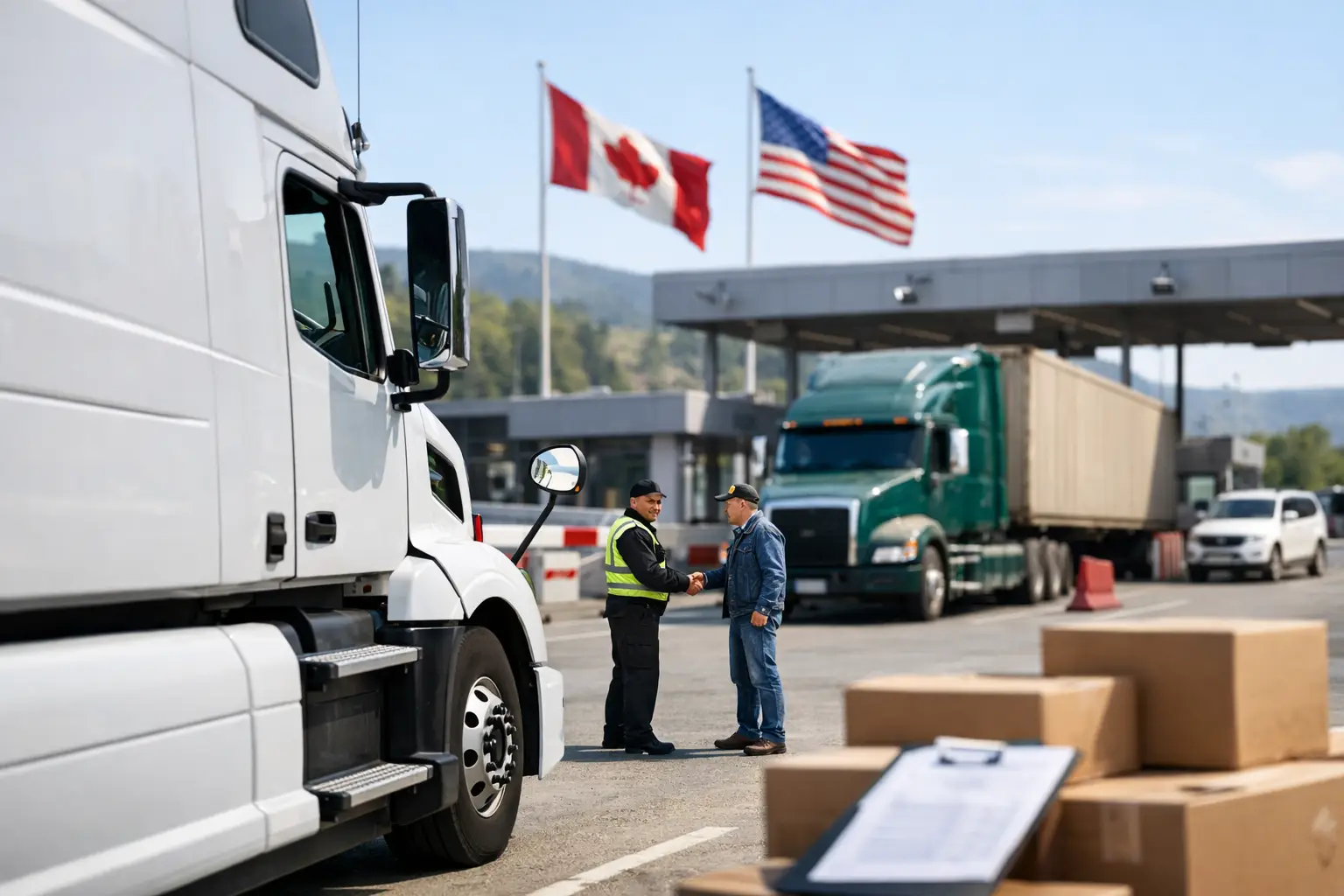
A cross-border load can be physically ready, dispatched on time, and still lose a full day at the border because the routing plan did not account for clearance, equipment, or port conditions. Learning how to route border shipments is not simply a matter of choosing the shortest highway. It requires aligning the pickup, carrier, customs process, border crossing, delivery appointment, and contingency plan before freight is loaded.
For U.S.-Canada shippers, the best route is the one that protects the delivery commitment while controlling avoidable cost and exposure. That may be the fastest crossing on a normal day, but it may also be a different port of entry when the freight is oversized, the consignee has limited receiving hours, or clearance documentation needs additional review.
Start With the Shipment Requirements
Routing begins with the freight, not the map. Confirm the commodity, dimensions, total weight, number of pieces, packaging, pickup date, delivery deadline, and handling requirements. A standard dry van shipment has different routing options from a flatbed load, a Conestoga shipment, a straight truck delivery, or freight requiring final-mile coordination.
The freight profile determines whether the carrier can use common border crossings, requires permits, needs securement inspections, or must avoid routes with equipment restrictions. Oversized industrial components, for example, may require a more controlled crossing plan and carefully sequenced permits. High-value or time-sensitive freight may justify a route with stronger carrier availability and a more predictable delivery window rather than the lowest linehaul rate.
Delivery conditions matter just as much. Ask whether the consignee accepts freight after normal hours, requires an appointment, has dock-height access, or needs a liftgate, inside delivery, or jobsite coordination. A route that looks efficient on paper can fail if the receiving location cannot unload the selected equipment when it arrives.
Choose the Crossing Based on Operations, Not Distance
The nearest border crossing is not automatically the right one. A practical routing decision weighs total transit time, border wait risk, highway access, carrier positioning, clearance process, and the destination's receiving schedule.
For freight moving through Southern Ontario and the U.S. Midwest or Northeast, crossing selection can materially affect daily execution. Congestion, construction, weather, and commercial traffic patterns can change the viability of a lane quickly. A carrier with equipment already positioned near the pickup and a planned crossing can often provide more dependable service than a lower-cost option that must deadhead equipment or rely on a less stable handoff.
Routing should also account for whether the load will move as a direct truckload, dedicated run, consolidated shipment, or multi-stop delivery. Direct truckload service usually provides the most control for urgent freight. Consolidation can reduce cost for freight that has flexibility, but it adds handling and schedule dependencies. Dedicated transportation may be appropriate for recurring cross-border lanes where pickup and delivery consistency matter more than spot-market pricing.
When comparing route options, evaluate the entire movement: pickup access, origin terminal or carrier location, crossing, clearance, destination highway access, and final delivery. Saving 30 miles at the border does not help if it adds several hours of waiting at a receiver or puts the truck outside permitted delivery hours.
Build Customs Clearance Into the Routing Plan
Customs clearance is part of transportation execution, not a separate administrative task to handle after dispatch. The carrier, customs broker, importer of record, exporter, and shipper must have matching information before the truck approaches the border.
At a minimum, verify that commercial invoices, bills of lading, commodity descriptions, quantities, values, country of origin details, and applicable tariff classifications are complete and consistent. The declared information must match the freight that is physically loaded. Differences between documents and shipment contents can create inspections, rework, storage exposure, and missed delivery appointments.
Determine early who is responsible for customs entry, duties and taxes, broker instructions, and any product-specific requirements. Incoterms can clarify commercial responsibility, but they do not replace clear operating instructions among the parties involved. A shipment can have correct terms of sale and still be delayed if the broker has not received the documents in time or the carrier lacks the required clearance reference information.
For freight entering the United States, the parties involved may need advance filing and entry data through U.S. customs systems. Freight entering Canada may require corresponding commercial release information and importer readiness. Requirements depend on the shipment and parties involved, so route planning should include confirmation with the customs broker before pickup. Do not assume a previous shipment's process applies unchanged to a new commodity, importer, or lane.
Match the Equipment to the Lane and Freight
Equipment selection affects route reliability. A dry van may be the efficient answer for palletized, protected freight, while a flatbed or Conestoga may be required for machinery, steel, construction materials, or freight that cannot load through dock doors. Specialized and oversized freight can introduce axle, height, securement, escort, and permit considerations that must be addressed before dispatch.
A Conestoga can offer weather protection and side-loading flexibility, but capacity may be tighter than standard van capacity. Flatbed equipment may support the freight profile but require a securement plan and more attention to weather. Straight trucks can be useful for local or final-mile moves, especially where access is limited, but they are not always the best fit for long-haul volume or heavy freight.
The operational question is not which equipment is cheapest. It is which equipment can legally, safely, and predictably complete the movement. Selecting the wrong trailer often creates accessorial charges, rejected pickups, reloading, or damage risk that outweighs any initial savings.
Plan for the Handoff Points
Most border shipment problems occur at handoff points: shipper to carrier, carrier to broker, border to carrier dispatch, and carrier to consignee. Define who owns each step and what information must be confirmed before the next step begins.
Before pickup, confirm the freight is ready, documents are available, and the driver has the proper reference numbers and contact details. During transit, provide visibility that is useful to the operation, including pickup confirmation, border approach status, clearance updates when applicable, and estimated delivery timing. If a delay occurs, the right response is early communication and a workable recovery plan, not a late notice after an appointment has already been missed.
For recurring lanes, build a repeatable operating playbook. Record preferred crossings, normal transit times, receiver restrictions, equipment requirements, broker contacts, commodity details, and common exceptions. This reduces dependence on individual knowledge and gives operations teams a faster starting point when volume increases or a primary carrier is unavailable.
Use Contingency Routes Before You Need Them
Border freight requires a primary plan and a practical backup. Weather, road closures, inspection activity, capacity shortages, and late production can all change a route after the load is tendered. A contingency plan should identify alternate crossing options, recovery delivery windows, available equipment types, and escalation contacts.
Not every shipment needs the same level of redundancy. A flexible replenishment load may tolerate a standard routing approach. A line-down manufacturing shipment, project-critical delivery, or scheduled final-mile appointment needs more proactive coordination. In those cases, the transportation provider should assess capacity and routing risk before accepting the load, not after the truck is already committed.
A brokerage partner with asset-based capability can add useful flexibility when conditions change. Access to multiple carrier options, specialized equipment, and direct operational support makes it easier to adjust a route without forcing the shipper to coordinate separate providers for every exception.
Measure the Route After Delivery
A completed delivery is not the end of route planning. Review whether pickup occurred as scheduled, how long the freight spent at the crossing, whether documents were accepted without correction, and whether delivery met the consignee's requirements. Track accessorial charges and service failures alongside the freight rate.
Over time, this data shows which lanes, crossings, carriers, and equipment combinations deliver consistent results. It also identifies where a lower-cost routing choice is creating hidden cost through delays, detention, re-deliveries, or administrative effort.
For businesses moving freight regularly between Canada and the United States, dependable routing comes from disciplined preparation and active execution. Midemide Logistics can coordinate the carrier capacity, equipment, cross-border planning, and delivery details required to keep complex freight moving. The most effective route is the one built around your freight, your customs process, and the delivery promise your customer is counting on.