
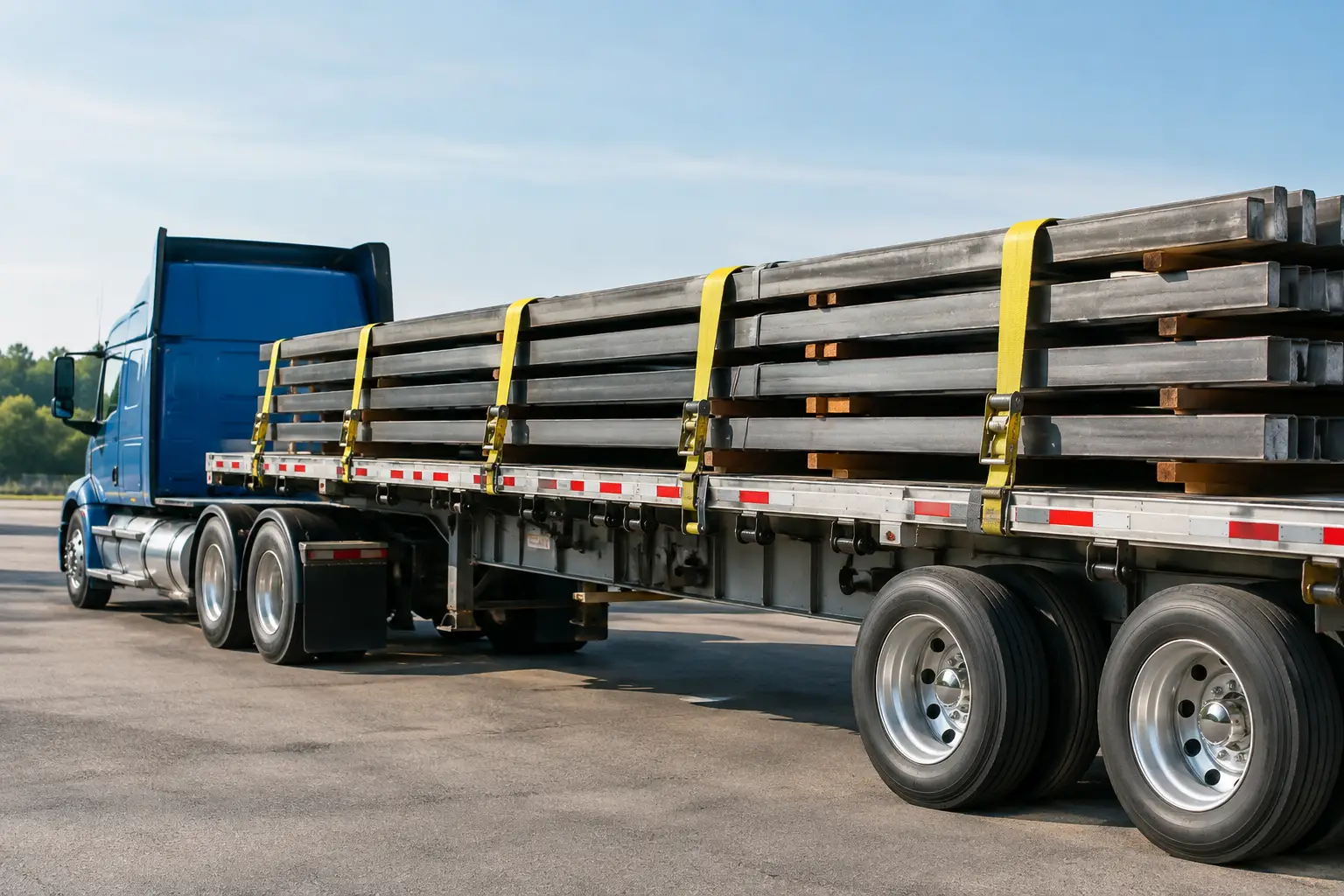
A flatbed shipment can look secure at departure and still fail on the road. A strap can loosen after the first few miles, an edge can cut into webbing, or a load can shift when braking hard on a ramp. Knowing how to secure flatbed cargo means treating securement as a planned part of the shipment, not a final task completed after loading.
For manufacturers, distributors, and construction-related shippers, proper securement protects people, freight, equipment, and delivery schedules. It also reduces the risk of rejected pickups, roadside violations, cargo claims, and costly rework. The right method depends on the commodity, trailer, route, and applicable regulations, but the operating principles stay consistent.
Start With the Load, Not the Tie-Downs
Cargo securement begins before the truck arrives. The shipper should know the cargo dimensions, total weight, individual piece weights, center of gravity, packaging condition, and available lifting points. Those details determine whether a standard flatbed is appropriate or whether the shipment needs a step deck, double drop, Conestoga, extendable trailer, or specialized equipment.
Weight distribution matters as much as the total payload. A load placed too far forward, too far back, or unevenly across the trailer can create axle-weight problems and make the equipment harder to control. Dense machinery may require blocking, cribbing, or a specific loading position. Long steel, lumber, pipe, or precast materials may create different forward, rearward, and lateral movement risks.
The trailer deck must also be compatible with the freight. Damaged pallets, wet dunnage, weak banding, or unstable stacking can compromise an otherwise sound securement plan. If the cargo cannot safely withstand normal road vibration, acceleration, braking, and cornering, it needs to be repackaged or supported before it is loaded.
How to Secure Flatbed Cargo With the Right Equipment
The securement device must be rated for the job. Chains, binders, web straps, winches, anchor points, rub rails, blocking, edge protection, tarps, and dunnage each serve a specific purpose. They are not interchangeable simply because they are available at the dock.
In general, chain is well suited to heavy equipment, steel, and freight with approved securement points. Web straps are commonly used for palletized freight, building materials, crated goods, and other products that could be damaged by chain. Both must have a working load limit that supports the securement plan. The capacity of the complete system is limited by its weakest rated component, including the anchor point and connector.
Cargo should be restrained against forward movement, rearward movement, and side-to-side movement. Direct tie-downs attach to the cargo itself, while indirect tie-downs pass over the freight and apply downward pressure to help prevent shifting. Many loads require a combination of both approaches, along with friction material, blocking, or chocks.
Do not rely on friction alone. Even a heavy load can slide when a driver brakes suddenly, turns sharply, encounters a rough surface, or travels in rain, snow, or ice. Anti-slip mats can improve resistance between the cargo and deck, but they do not replace correctly rated tie-downs.
Protect Tie-Downs From Damage
Sharp corners are a frequent cause of strap failure. Use edge protectors or corner guards anywhere webbing contacts metal, concrete, crating, or another abrasive surface. The protection should prevent cutting and should not allow the strap to slip off the edge under tension.
Chains also need attention. They should not be twisted, damaged, welded without approval, or connected in a way that reduces their rated strength. Drivers should inspect hooks, binders, winches, ratchets, and anchor points for wear, deformation, corrosion, or improper engagement before departure.
Build a Securement Plan for the Commodity
There is no single tie-down pattern for every flatbed load. Commodity-specific requirements and manufacturer instructions can apply to items such as machinery, vehicles, coils, pipe, concrete products, lumber, and heavy construction materials. A shipment that appears straightforward may have a unique center of gravity or handling restriction that changes the securement method.
For example, a steel coil requires positive restraint designed to prevent rolling and shifting. Pipe may need properly positioned chocks and containment to prevent lateral movement. Machinery often needs chains connected to designated tie-down points, with careful attention to boom position, attachments, and detachable components. Palletized cargo may require straps, corner protection, and tarping, but should also be assessed for stack stability and the strength of its pallet base.
Freight should never be secured to components not designed as anchor points. Likewise, packaging bands, shrink wrap, or light-duty shipping materials are not cargo securement devices. They may hold a product together during handling, but they do not provide reliable restraint for highway transportation.
Inspect Before Departure and During Transit
A securement check is not complete when the driver pulls away from the loading area. Tie-downs can settle as the cargo compresses or moves slightly into position. This is especially common with lumber, packaged building products, machinery on dunnage, and loads exposed to changing weather.
Before departure, verify that the cargo is positioned correctly, all tie-downs are tensioned, loose ends are secured, and required flags, lights, or oversize markings are in place. Check that tarps are tightly secured and will not billow, tear, or obstruct lights and reflectors. A loose tarp can become both a safety hazard and a cause of cargo damage.
Drivers should recheck cargo securement after the initial portion of the trip and at appropriate intervals during transit, following applicable rules and company procedures. Additional inspections are prudent after hard braking, severe weather, rough roads, long stops, or any event that could affect the load. A brief inspection can prevent a damaged strap or shifted piece from becoming a roadside emergency.
Account for Weather, Route, and Cross-Border Requirements
The route affects the securement plan. A short local delivery with multiple stops may require more frequent handling and inspection than a long highway move. Winter operations introduce snow, ice, road spray, and freeze-thaw conditions that can reduce friction and affect tarps, straps, and deck surfaces. High winds are especially relevant for tall, lightweight, or tarp-covered freight.
Cross-border shipments require another level of planning. Freight moving between the United States and Canada must meet the applicable cargo securement requirements, while permits, dimensions, weight limits, and escort requirements can differ by jurisdiction for oversized loads. Shippers should provide complete commodity information early so the carrier or logistics provider can select the correct equipment and plan the move without last-minute changes.
This is also where communication matters. If a shipment is loaded by one party, transported by another, and received at a job site with limited unloading access, everyone needs clear instructions on load orientation, handling restrictions, delivery appointments, and required equipment. Securement is strongest when the shipping plan supports it from origin through final delivery.
Avoid the Most Common Flatbed Securement Failures
Most failures come from routine shortcuts rather than unusual events. Using too few tie-downs, selecting equipment by appearance rather than rated capacity, failing to protect straps at edges, and loading unstable freight onto damaged pallets all create avoidable exposure. Another common mistake is assuming that a securement pattern used on a prior load will work for a different commodity or trailer configuration.
A practical process prevents these issues: confirm the freight details, match the equipment to the commodity, inspect the trailer and securement devices, load for proper weight distribution, apply the required restraints, and conduct documented checks throughout the trip. When a load presents uncertainty, resolve it before the truck leaves. Reworking a shipment at the dock is far less disruptive than managing a shift or violation in transit.
For complex, oversized, or cross-border moves, experienced coordination can make the difference between a workable plan and an expensive delay. Midemide Logistics helps shippers align equipment, carrier capacity, routing, and shipment requirements for flatbed and specialized freight across the United States and Canada.
The best time to address a securement concern is while the cargo is still at the dock, with the right equipment and the right people available. A disciplined plan at origin keeps freight moving safely when conditions on the road are no longer predictable.