
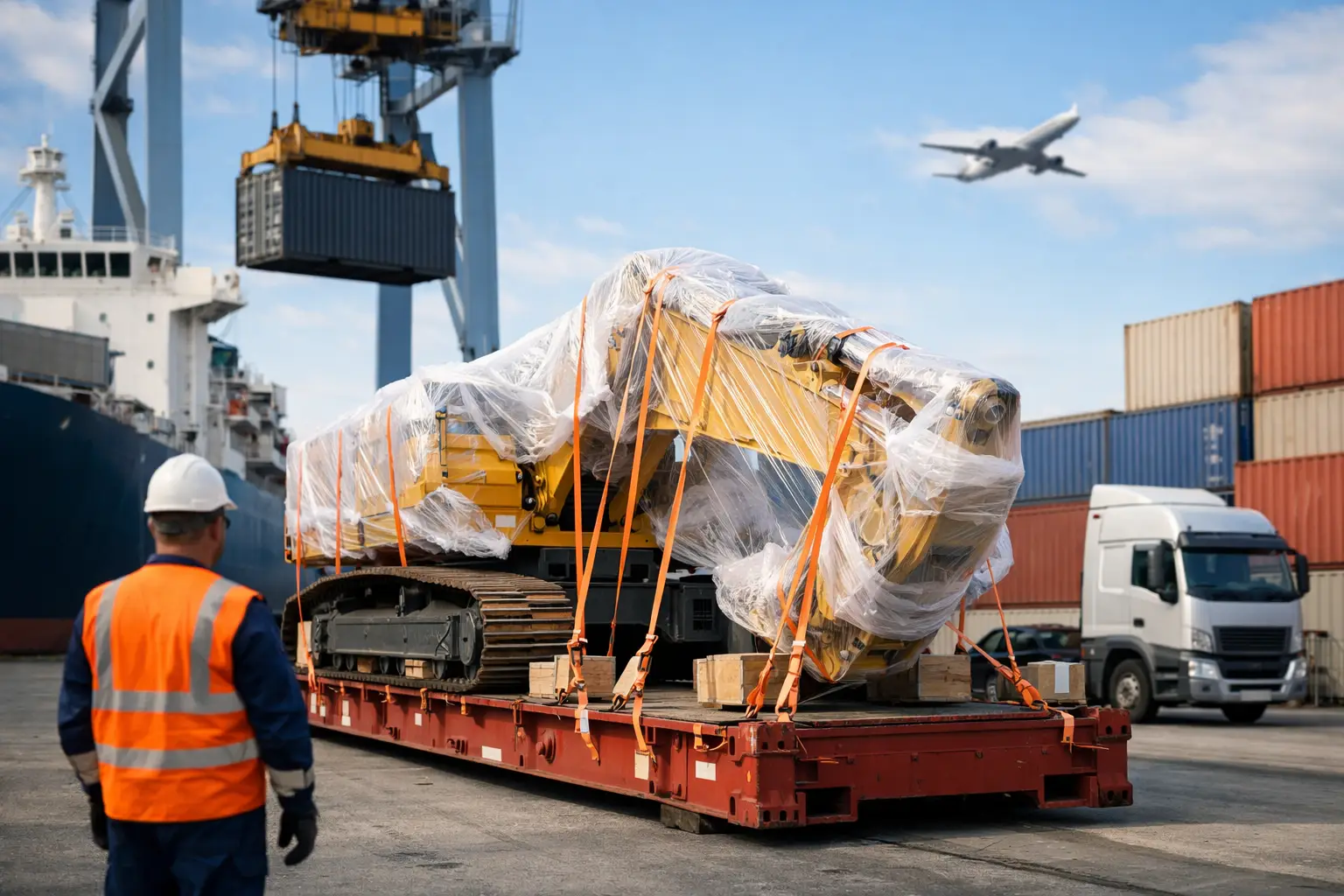
A machine can be fully operational at pickup and still arrive damaged, delayed, or unusable if the transport plan does not match its size, weight, lifting points, and destination requirements. Shipping industrial machinery safely starts well before a truck is dispatched. It requires accurate shipment data, the correct trailer configuration, qualified loading resources, and clear accountability from origin through delivery.
For manufacturers, construction suppliers, distributors, and industrial operations, machinery moves are rarely routine freight. A CNC machine, hydraulic press, production line component, generator, or skid-mounted unit may require specialized securement, oversized permits, indoor final-mile handling, or coordinated border documentation. Treating it like a standard palletized shipment creates unnecessary risk.
Planning for Shipping Industrial Machinery Safely
The first requirement is a complete equipment profile. Gross weight alone is not enough. The transportation provider needs the machine's overall length, width, height, weight, center of gravity, axle or support-point locations, and condition at pickup. Include any loose components, control cabinets, tooling, guards, fluids, or accessories that will move with the equipment.
Dimensions should be measured after the machinery is prepared for transport, not from an old specification sheet. Crating, skidding, protective wrapping, or lifting fixtures can change the final footprint. Height is especially critical when equipment will travel on a flatbed, step deck, lowboy, or specialized trailer. A few inches can affect route selection, permit needs, and bridge-clearance planning.
The loading method also needs to be confirmed early. Some machinery can be loaded by forklift, while other units require a crane, gantry, rigging crew, or tilt-bed service. Do not assume the pickup site and delivery site have the same capabilities. A plant may have an overhead crane at origin but no unloading equipment at the destination. When that gap is identified after the truck arrives, detention, rescheduling, and equipment exposure can follow.
Select Equipment Based on the Load and the Site
Trailer selection is a safety decision, not simply a rate decision. Dry vans and straight trucks can protect smaller machinery from weather and road debris when loading dock access and interior clearance are available. Flatbeds provide flexible loading access for crated equipment, skids, and units that exceed van dimensions. Conestoga trailers offer flatbed-style side loading with added weather protection, which can be useful for machinery that cannot be exposed to rain but does not require a fully enclosed van.
For tall, heavy, or oversized machinery, a step deck, double-drop, removable gooseneck, or lowboy may be required. The right configuration depends on the machine's height, weight distribution, and loading method. Lower deck height can prevent an over-height move, but it may also introduce route limitations or require a different loading approach. The safest option is the one that accounts for the complete shipment, not just the piece of equipment itself.
Destination access matters just as much as highway transport. Confirm gate widths, turning radius, dock availability, overhead clearance, surface conditions, appointment restrictions, and whether the driver can safely position the trailer. Industrial sites often have limited room to maneuver, particularly during active production hours. A pre-delivery site review can prevent a safe highway move from becoming an unsafe final-mile event.
Build a Securement Plan Around the Machine
Industrial machinery must be secured to prevent shifting, tipping, vibration damage, and contact with trailer surfaces. The securement plan should account for the machine's center of gravity and approved tie-down points. Using chains, straps, blocking, bracing, or dunnage without understanding the equipment's structure can damage sensitive housings, rails, electrical cabinets, and calibration components.
Whenever possible, manufacturers' transport instructions should guide the plan. Some machines require locking transport bolts, securing moving assemblies, draining or stabilizing fluids, and protecting exposed connections. Others need shock-sensitive components removed and packaged separately. If a unit is mounted to a skid or base, verify that the skid is structurally capable of supporting the machine through loading, transit, and unloading.
Photograph the machinery before loading from multiple angles. Record existing scratches, dents, leaks, and open panels, then document the load once it is secured. This creates a clear condition record and gives operations teams a reference if questions arise at delivery. For high-value equipment, condition reporting should be part of the shipping process, not an afterthought.
Drivers should inspect securement at required intervals and after significant changes in driving conditions. Still, the best inspection cannot correct an inadequate initial plan. Proper securement begins with accurate information and experienced loading personnel.
Manage Oversized and Cross-Border Requirements Early
A shipment may become oversized based on overall loaded dimensions, not just the machinery itself. When a load exceeds legal length, width, height, or weight limits, permits may be required for each jurisdiction on the route. Some moves also require escorts, restricted travel periods, approved routing, or advance utility-clearance coordination.
Permit planning takes time, especially when the route crosses multiple states or provinces. Last-minute changes to dimensions, pickup dates, or trailer type can require permits to be revised. For time-sensitive projects, build permit lead time into the production and dispatch schedule rather than treating it as a final administrative step.
Cross-border moves between the United States and Canada require equally careful preparation. Commercial invoices, packing details, commodity descriptions, country-of-origin information, and customs documentation must accurately reflect the machinery and any accompanying parts. Serial numbers can be particularly valuable for identifying high-value equipment and avoiding confusion when used machinery, repaired units, or temporary imports are involved.
A freight partner coordinating cross-border machinery should understand both the transportation plan and the document flow. A truck held at the border due to incomplete information can affect delivery appointments, jobsite schedules, and equipment availability. Clear communication among the shipper, consignee, carrier, customs parties, and loading crew keeps the physical move aligned with the paperwork.
Protect the Equipment From Transit Conditions
Machinery damage is not always caused by a collision or a major securement failure. Moisture, vibration, road debris, temperature swings, and unsecured internal components can create expensive problems. The appropriate level of protection depends on the equipment's value, sensitivity, and trailer type.
Enclosed equipment may be the right choice for electronics-heavy machinery, finished equipment, or units moving through poor weather. Flatbed freight can be appropriate when the machine is designed for outdoor service or is fully crated and protected. Tarps can help in certain applications, but they are not a substitute for purpose-built packaging or an enclosed trailer when moisture control is critical.
Sensitive items may also benefit from moisture barriers, corrosion protection, shock indicators, or vibration monitoring. These measures add cost, so they should be matched to the risk. A rugged piece of field equipment does not require the same handling protocol as a precision machining center with delicate controls and tight calibration requirements.
Cargo coverage should be reviewed before pickup. Confirm the declared value, the carrier's liability terms, any policy exclusions, and whether additional cargo insurance is needed. High-value machinery often exceeds standard freight liability limits, making proactive coverage review a practical part of risk management.
Coordinate Pickup and Delivery as One Operation
A successful machinery move depends on the handoffs. The shipping team should provide the driver with a complete pickup contact, site instructions, loading appointment, equipment details, and any safety rules required at the facility. At delivery, the receiving team needs the same level of clarity: arrival window, unloading method, required labor, site contact, and placement instructions.
If machinery is moving to a jobsite, newly leased facility, or customer location, confirm who has authority to accept the freight. A driver should not be asked to wait while the consignee determines where the equipment belongs or searches for unloading resources. Clear delivery instructions reduce exposure for the driver, the equipment, and the site team.
For recurring equipment moves or complex lanes between Canada and the United States, a single logistics partner can improve consistency by maintaining shipment profiles, preferred trailer specifications, document requirements, and site-specific handling notes. Midemide Logistics coordinates specialized, oversized, flatbed, Conestoga, and cross-border freight with the operational focus these moves require.
The safest machinery shipment is usually the one that receives the most disciplined attention before the truck arrives. Verify the details, plan for the real conditions at both sites, and give every party the information needed to execute without assumptions.