
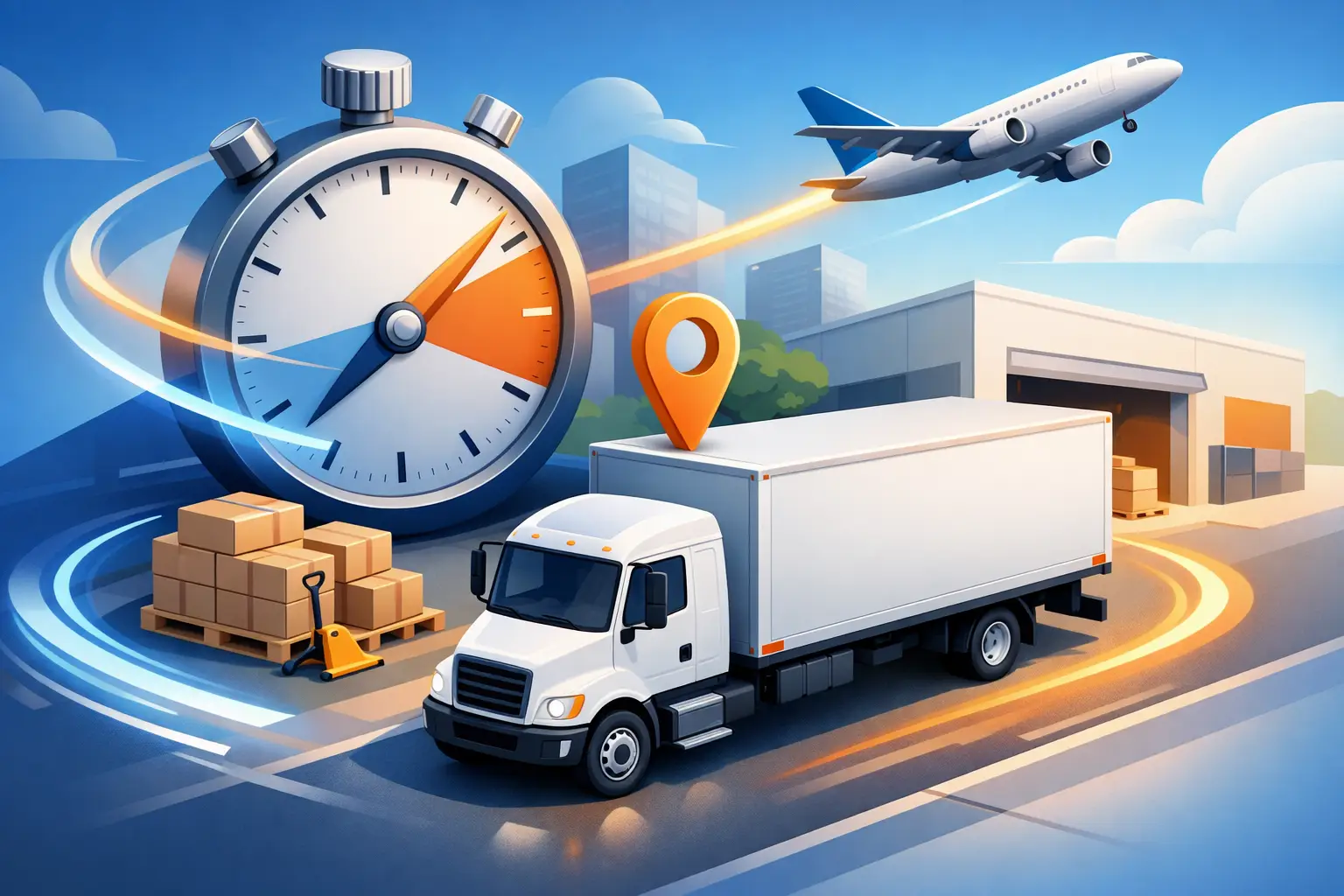
A missed dock window can turn a routine shipment into a production problem. That is where straight truck delivery earns its place in a freight strategy. For shippers moving palletized freight, equipment, retail replenishment, or urgent regional orders, it offers a practical middle ground between parcel networks and full tractor-trailer service.
Straight trucks are built for freight that needs direct handling, tighter control, and easier site access. They are often the right fit when shipment size, delivery speed, or destination constraints make other equipment less efficient. For operations teams trying to reduce delays and avoid unnecessary touches, that matters.
What straight truck delivery is built to handle
A straight truck has the cab and cargo box on a single chassis. That design makes it different from a tractor pulling a trailer, and the difference is operationally useful. Straight trucks are easier to position in urban areas, commercial lots, construction-adjacent locations, and customer sites where turning radius or dock access is limited.
In practice, straight truck delivery is commonly used for freight that is too large or too heavy for small-package carriers but does not require a full trailer. It is also a strong option when freight needs to stay on one vehicle from pickup to delivery. Fewer transfer points can reduce the chance of damage, shrink exposure to delays, and improve chain of custody.
This equipment is often used for regional distribution, final-mile commercial delivery, expedited shipments, trade show materials, store fixtures, industrial components, and replacement parts. It can also support cross-border freight, especially when timing and direct service are more important than maximizing trailer cube.
When straight truck delivery makes the most sense
Not every shipment belongs on a straight truck. The value comes from matching the equipment to the freight and the delivery environment.
The clearest use case is urgency. When a plant needs a replacement component, a distributor needs replenishment, or a customer order has a narrow receiving window, straight truck service can provide direct transit without the dwell times that often come with hub-based networks. That does not mean every urgent shipment should move this way, but when speed and handling control matter, it is a strong option.
Access is another reason shippers choose it. Many delivery points are not designed for standard 53-foot trailers. Retail back doors, downtown commercial buildings, medical facilities, and smaller warehouses may have limited maneuvering space. A straight truck can often reach those locations with less disruption and lower risk.
Shipment profile matters too. If freight fills only part of a trailer, paying for a full truckload may not make sense. Straight trucks can provide a more efficient fit for mid-sized shipments while still delivering dedicated service. For some shippers, that balance improves both service levels and transportation spend.
The operational advantages for commercial shippers
For manufacturers, distributors, retailers, and industrial shippers, the benefit is not just vehicle size. It is what the equipment allows operationally.
Direct handling is one of the biggest advantages. Freight loaded once and delivered on the same unit is generally easier to track and protect. That is useful for shipments with packaging sensitivity, high replacement cost, or customer-facing delivery requirements. Less handling can mean fewer exceptions.
Scheduling flexibility is another advantage. Straight truck capacity can support same-day, next-day, routed, and appointment-based deliveries across regional lanes. That gives shipping teams more options when balancing production schedules, inventory needs, and customer commitments.
There is also a service advantage in mixed environments. Some freight moves through standard docks. Some needs liftgate support, inside delivery coordination, or jobsite access. Straight truck delivery can bridge those needs more effectively than modes designed around dock-to-dock linehaul alone.
For cross-border freight between the United States and Canada, it can also support tighter coordination when documentation, timing, and communication need close control. The right provider can align equipment, customs-facing requirements, and delivery scheduling without adding unnecessary complexity.
Straight truck delivery vs. other freight options
Shippers usually evaluate straight trucks against LTL, sprinter vans, and full truckload. Each has a place, and the right choice depends on the shipment.
Compared with LTL, straight truck delivery offers more control and fewer touchpoints. LTL is often economical for routine freight that can move through terminal networks and tolerate standard transit variability. A straight truck is usually the better choice when freight is time-sensitive, damage-sensitive, or moving to a location where direct service matters.
Compared with sprinter vans or cargo vans, straight trucks handle larger and heavier shipments. If freight exceeds van capacity or requires more structured cargo space, a straight truck can carry the load without pushing into trailer-level equipment.
Compared with full truckload service, the trade-off is different. A tractor-trailer may be more efficient for higher-volume freight or long-haul moves where cube and weight capacity are the priority. Straight trucks become more attractive when the shipment is smaller, the delivery site is constrained, or the service requirement calls for more agility.
The key point is that equipment choice should reflect the actual delivery conditions, not just the freight class or lane history. A shipment that has always moved one way is not always moving the best way.
What to consider before booking straight truck service
Successful execution starts with shipment details. Dimensions, weight, pallet count, stackability, and packaging all affect equipment fit. So do delivery requirements such as appointment times, liftgate needs, inside access, and limited receiving hours.
Route characteristics matter as well. Urban congestion, border crossings, remote delivery points, and after-hours receiving all change how a shipment should be planned. A straight truck may be the right equipment, but service quality still depends on lane design and communication.
It also helps to think beyond a single load. If your operation frequently ships partial-volume freight, urgent orders, or deliveries to locations with restricted access, straight truck delivery may deserve a defined role in your transportation mix rather than being used only as an exception. That approach can improve planning consistency and reduce last-minute mode changes.
Provider capability is another factor. Capacity access is only part of the equation. Shippers should look for a partner that can manage appointment scheduling, shipment visibility, cross-border coordination when needed, and exception handling when delivery conditions change. Execution matters more than quoting speed.
How straight truck delivery supports final-mile and regional freight
Many commercial shipments fail at the last segment, not the linehaul segment. Freight arrives in the market but runs into delivery constraints, limited access, or customer-specific requirements. Straight truck delivery helps solve that problem because it is well suited to the operational realities of final-mile business freight.
That includes store deliveries, branch replenishment, equipment drop-offs, project materials, and commercial customer orders that need more attention than a standard dock shipment. In these cases, the goal is not only to move freight from point A to point B. The goal is to complete delivery without friction for the receiving site.
Regional distribution also benefits. When shipments move within shorter lanes, speed and route flexibility often carry more value than maximizing trailer utilization. A straight truck can support faster turns, more precise scheduling, and better alignment with local delivery windows. For businesses trying to keep inventory moving without overcommitting larger equipment, that flexibility is useful.
Midemide Logistics supports these kinds of moves as part of a broader freight portfolio, which matters for shippers that do not move one shipment type all week. A partner that can handle straight truck delivery alongside dedicated, specialized, and cross-border freight can simplify day-to-day transportation management.
Choosing a logistics partner for straight truck delivery
The best straight truck service is not defined by the truck alone. It is defined by planning discipline, communication, and the ability to match capacity to the shipment requirement. That is especially true for businesses managing recurring freight across the US and Canada, where service failures can affect production, inventory, and customer relationships quickly.
A capable logistics partner should understand when straight trucks are the right answer and when they are not. Sometimes a shipment needs the directness of this mode. Sometimes LTL, dedicated equipment, or another specialized option is the better fit. Good freight planning is not about forcing one mode into every problem. It is about choosing the equipment that protects service, cost, and reliability at the same time.
For shippers under pressure to improve delivery performance, straight truck delivery is often less about speed alone and more about control. When the freight is valuable, the site is difficult, or the schedule leaves little room for error, that control can make the difference between a completed delivery and a preventable disruption.
The practical next step is to look at the shipments that create the most friction in your network. If they involve partial-volume freight, constrained access, urgent timing, or direct-to-site delivery, straight truck service may be the fix that brings more stability to the lane.