
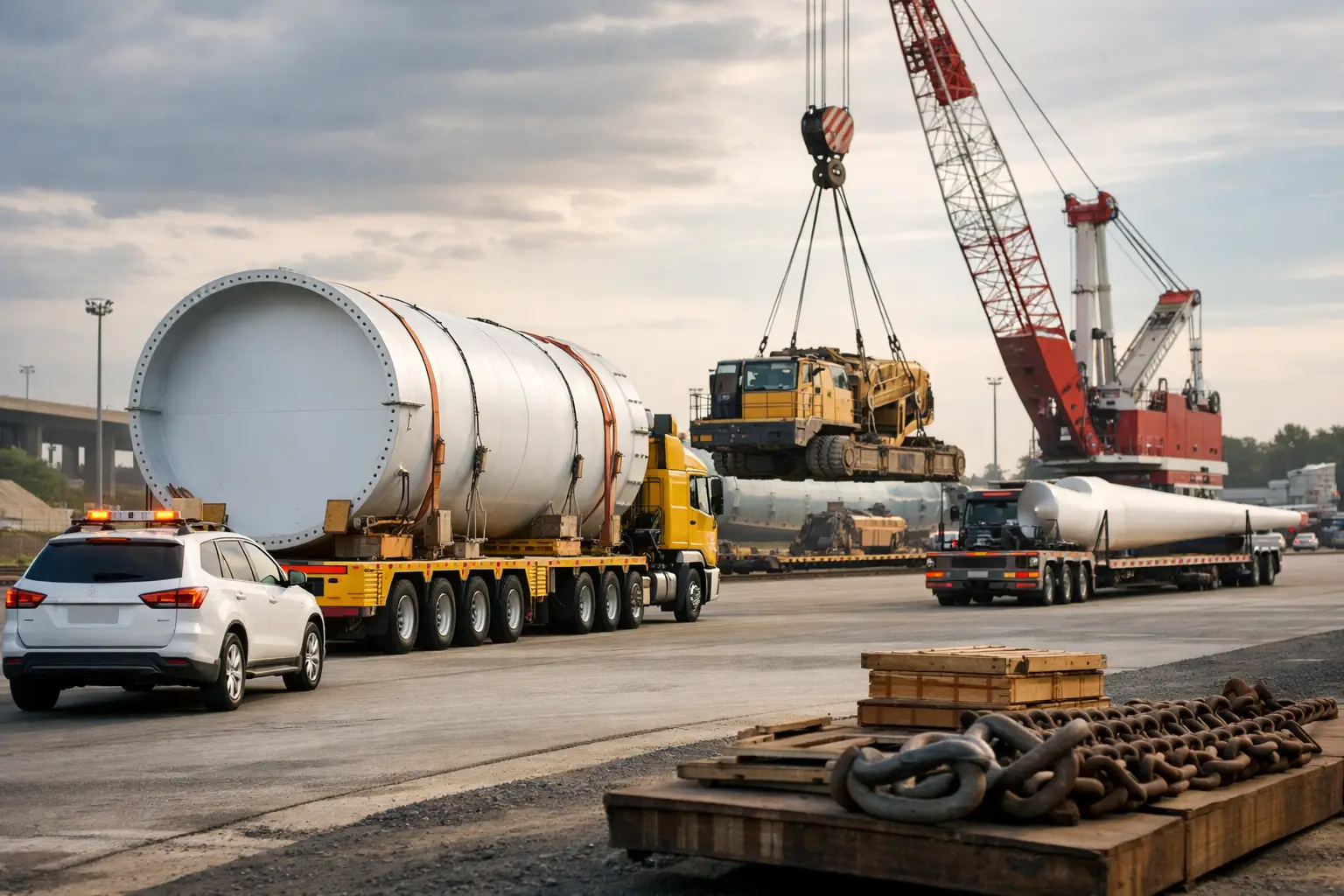
A shipment can look straightforward on a loading dock and become highly specialized once its dimensions are measured. What affects oversized freight costs is not simply the distance between pickup and delivery. The final rate reflects the equipment, permits, route restrictions, labor, timing, and planning required to move a load legally and safely.
For manufacturers, construction suppliers, equipment dealers, and industrial shippers, the most useful question is not, "What is the cheapest truck?" It is, "What is required to move this freight without a preventable delay?" A complete shipment profile makes that answer clearer and gives the carrier network a fair basis for pricing.
What Affects Oversized Freight Costs on Each Move
Oversized freight is generally freight that exceeds a jurisdiction's standard legal limits for width, height, length, or weight. The exact thresholds and permit requirements vary by state, province, and local authority. A load may be legal on one part of a route but require permits, restricted travel hours, or a different configuration after crossing a state or provincial line.
A shipment's dimensions are often the first pricing driver. Width can trigger escort requirements and lane restrictions. Height can eliminate routes with low bridges, utility lines, or overpasses. Length can affect turning radius, ramp access, and the type of trailer that can be used. Weight may require additional axles, a heavier-haul trailer, or a route designed around bridge and axle limits.
The difference between a load that is slightly over-dimensional and one that is exceptionally large is substantial. A 10-foot-wide machine may require a different operating plan than a 14-foot-wide unit, even when both are moving the same distance. That is why accurate dimensions must include the freight, skids, cradles, tarps, and any components that extend beyond the main body of the load.
Equipment Type and Capacity Availability
Specialized equipment carries a different cost structure than a standard dry van. Depending on the shipment, a move may require a step deck, double-drop, removable gooseneck trailer, multi-axle configuration, flatbed, or Conestoga. The equipment must match the freight's weight distribution, loading method, clearance requirements, and securement points.
Capacity also matters. If the required trailer type is in position near the pickup location, the rate may be more favorable. If a carrier must deadhead equipment a significant distance or reposition a specialized trailer after delivery, those costs can affect the quote. This is especially common for one-way moves into areas with limited outbound specialized freight.
Open-deck equipment can reduce loading constraints, but it introduces other considerations. Freight exposed to weather may need tarping, wrapping, or custom protection. A Conestoga can offer weather coverage while maintaining side-loading access, although availability and dimensions still determine whether it is the right fit.
Permits, Escorts, and Route Planning
Permits are a direct cost, but the planning behind them is just as important. Permit applications may involve multiple states or provinces, each with its own processing time, fee structure, travel rules, and dimensional thresholds. Some jurisdictions restrict oversize movement to daylight hours, weekdays, or specified routes. Holiday and peak-season restrictions can further narrow delivery windows.
Escort vehicles, also called pilot cars, may be required based on width, length, height, or route conditions. More complex moves may require front and rear escorts, high-pole escorts to verify overhead clearance, or coordination with utility providers. These services add cost, but they help protect the shipment, the public, and the delivery schedule.
Route surveys can be necessary for unusually tall, wide, or heavy freight. A practical route on a map may not be viable in the field due to construction zones, tight intersections, bridge ratings, local restrictions, or limited access at the consignee's site. The more route-specific work required, the more planning time and specialized resources the move will need.
Distance Matters, but Route Complexity Matters More
Mileage remains part of every freight quote. Fuel, driver hours, equipment utilization, and tolls all increase as distance grows. Yet an oversized shipment moving 300 miles through a restrictive corridor can cost more than a longer move on a permit-friendly route with fewer physical constraints.
Urban pickups and deliveries often add complexity. Congested streets, limited staging areas, narrow gates, active construction, and appointment-only receiving can slow a move that would otherwise be routine. A facility may need to reserve space for the truck, clear parked vehicles, provide a crane or forklift, or arrange site personnel before the load arrives.
Remote deliveries have a different cost profile. They can require long empty miles, reduced access to fuel and services, and more precise timing. For construction projects or industrial sites, road conditions and weather can also determine whether delivery is possible on a planned date.
Loading, Securement, and Site Requirements
Oversized freight costs can increase when a shipment requires special loading or unloading support. A carrier needs to know whether the freight is driven, rolled, lifted by crane, loaded by forklift, or placed with rigging. This affects trailer selection, appointment length, and the equipment or personnel needed at each end.
Securement is not an afterthought. Heavy machinery, steel components, fabricated structures, and irregular loads may require chains, binders, blocking, bracing, dunnage, or engineered securement plans. If the freight has no safe tie-down points or must be loaded in a specific orientation, that should be identified before dispatch.
Detention, layover, and driver-assist charges may apply when a jobsite is not ready, a crane arrives late, or the receiver cannot unload the freight as scheduled. Clear site coordination is one of the most effective ways to prevent these avoidable accessorial costs.
Timing, Seasonality, and Market Conditions
Lead time has a measurable effect on oversized transportation pricing. A move planned several days or weeks ahead gives a logistics team time to source the right equipment, verify permits, build a legal route, and coordinate escorts. A same-day or next-day request limits those options and may require a premium to secure capacity quickly.
Seasonal demand can also influence rates. Construction activity, agricultural cycles, major infrastructure work, and regional freight surges can tighten specialized trailer availability. Winter weather may create additional route and timing constraints in Canada and northern U.S. lanes, while hurricane season and extreme heat can affect access and operating conditions in other regions.
Fuel prices, tolls, carrier operating costs, and specialized driver availability all shape the market rate. These factors are outside a shipper's direct control, but better forecasting and shipment consolidation can reduce exposure to last-minute pricing pressure.
Cross-Border Requirements
Cross-border oversized freight adds another planning layer. Commercial documents, customs clearance, carrier eligibility, and shipment details need to be aligned before the truck reaches the border. A documentation issue can be expensive when a permitted or escorted shipment is held outside its planned travel window.
Canada-U.S. moves also require attention to differences in provincial and state permit rules. The legal configuration, approved route, and travel restrictions may change after crossing the border. Freight teams should confirm the origin, destination, border crossing, commodity description, dimensions, weights, and equipment requirements early enough to avoid rework.
How to Build a More Accurate Oversized Freight Quote
The best quote begins with complete information. Provide the loaded length, width, height, gross weight, axle weights when available, pickup and delivery addresses, commodity details, and photos of the freight. Include whether the load can be stacked, tarped, driven onto a trailer, or lifted, along with the available loading and unloading equipment.
It also helps to identify the required delivery date, site hours, appointment requirements, and any known access limitations. If the freight is crossing the border, share commercial documentation requirements and customs contacts before capacity is secured.
A qualified logistics partner should explain the operational assumptions behind the rate rather than offering a number with missing pieces. Midemide Logistics coordinates specialized equipment, permitting considerations, and cross-border freight planning so shippers can evaluate the full move before the truck is dispatched.
Treat oversized transportation as an execution plan, not a spot rate exercise. When dimensions, route conditions, site readiness, and timing are defined early, your team can control cost where it is controllable and protect the delivery date where it matters most.