
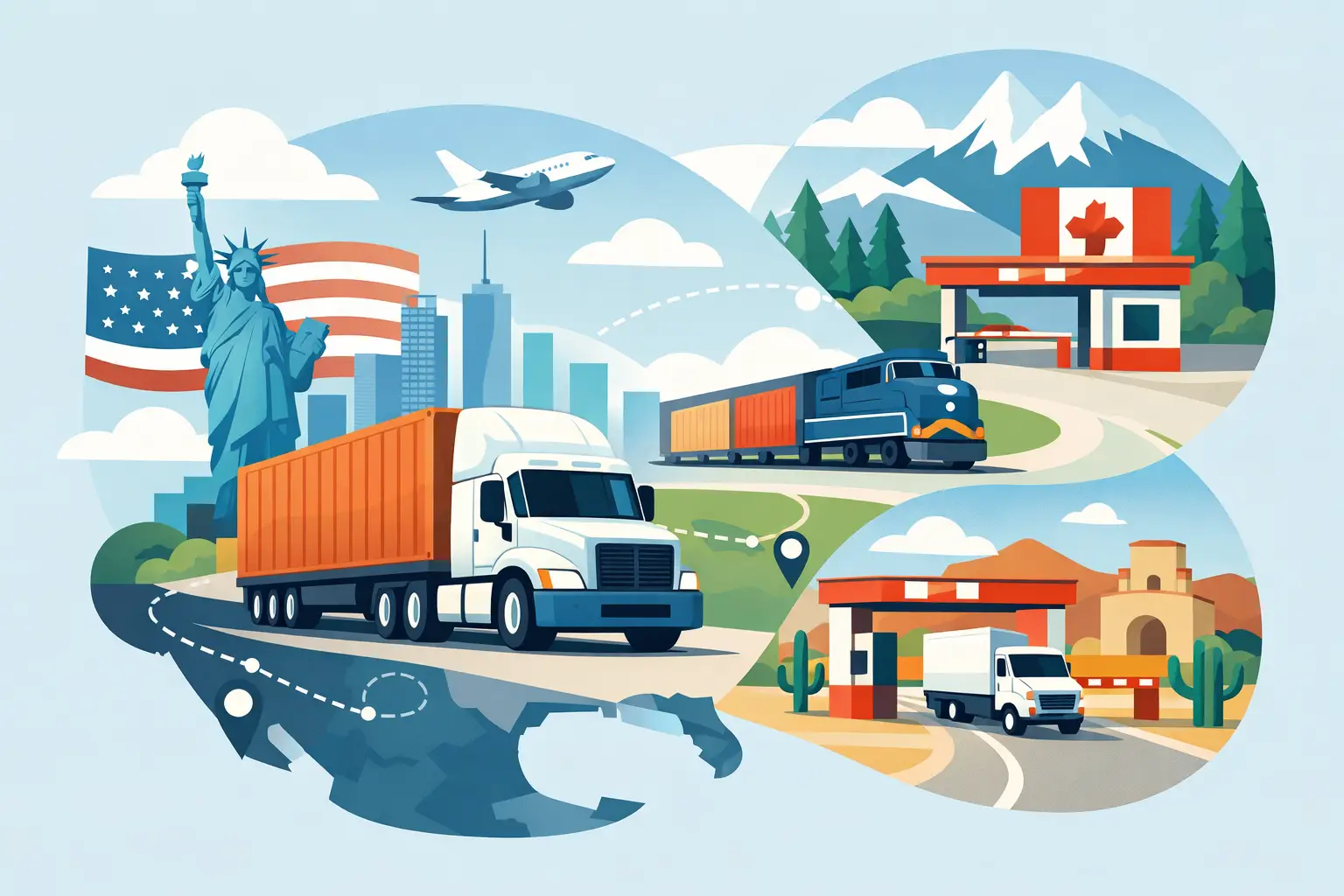
A truck can be loaded, dispatched, and on schedule - then lose hours at the border because a commercial invoice does not match the shipment or a required clearance step was missed. That is why the answer to what is cross-border freight goes beyond moving goods from one country to another. For US and Canadian shippers, it is a coordinated transportation process that combines equipment, carrier capacity, customs preparation, border clearance, delivery planning, and communication across the entire lane.
What Is Cross-Border Freight?
Cross-border freight is the commercial transportation of goods between countries. For businesses operating between the United States and Canada, it includes freight moving northbound into Canada and southbound into the US by truck, rail, air, or other approved modes.
The freight itself may be standard palletized product, raw materials, machinery, building supplies, temperature-sensitive goods, retail inventory, or oversized equipment. What makes the shipment cross-border is not the trailer type or freight class. It is the fact that the shipment must meet the transportation, customs, and import requirements of both countries.
A domestic shipment generally involves pickup, linehaul, and delivery within one regulatory environment. Cross-border freight adds another operating layer. The carrier must be authorized to cross the border, shipment documentation must be accurate, customs clearance must be arranged before arrival, and the consignee must be ready to receive freight after release. A delay at any one point can affect the full delivery schedule.
For supply chain teams, the practical goal is straightforward: move freight across the border with the same predictability expected on a domestic lane. Reaching that goal requires advance planning and clear ownership of each step.
How Canada-US Cross-Border Freight Moves
Most Canada-US commercial freight moves by truck because it provides direct pickup and delivery, flexible capacity, and strong coverage across industrial and distribution markets. Full truckload, less-than-truckload, straight truck, flatbed, Conestoga, and dedicated equipment can all support cross-border shipments when the carrier and equipment match the freight requirements.
The process usually begins with shipment details: origin and destination, pickup and delivery appointments, commodity description, weight, dimensions, value, packaging, and required equipment. Those details drive carrier selection and determine what documents are needed for customs entry.
Before the truck reaches the border, the importer or its customs broker prepares the entry information for the destination country. The carrier receives the shipment and clearance instructions needed to present the load at the crossing. Once customs releases the shipment, the truck continues to final delivery.
This sequence sounds simple, but it depends on accurate information moving between the shipper, freight provider, carrier, customs broker, importer of record, and receiver. A logistics partner can coordinate transportation and shipment visibility, while a licensed customs broker handles customs filing and clearance services. In many cases, the same shipper works with both parties on every cross-border load.
Customs Documentation Is Part of Freight Execution
Cross-border freight documentation is not administrative cleanup after a truck leaves the dock. It is a shipment-critical requirement. Incorrect descriptions, mismatched values, missing importer details, or incomplete paperwork can create a border hold even when the truck and driver are ready.
Documentation requirements vary by commodity, origin, destination, and importer setup. However, cross-border shippers commonly need to provide the following information:
- A commercial invoice with accurate seller, buyer, commodity, value, currency, and country-of-origin details
- A bill of lading that matches the shipment being tendered to the carrier
- The importer of record and consignee information
- Product classification details, including harmonized tariff codes when required
- Any commodity-specific certificates, permits, or supporting documents
The commercial invoice deserves particular attention. Customs agencies use it to understand what is being imported, who is responsible for the transaction, and how duties and taxes may apply. Vague product descriptions such as “parts” or “equipment” often create avoidable questions. A specific description that identifies the product, material, intended use, and quantity supports faster review.
Shippers should also confirm who is acting as the importer of record. That party is responsible for the import declaration and associated duties, taxes, and compliance obligations. The freight carrier transports the goods, but it does not automatically assume the importer’s legal responsibilities.
Choosing the Right Mode and Equipment
The right transportation solution depends on the freight, lane, service expectation, and delivery site. Cross-border freight is not one-size-fits-all, especially for industrial and project-driven shipments.
Dry van equipment is often appropriate for palletized, boxed, and protected freight. Flatbeds support materials that load from the top or side, including steel, construction materials, and machinery. Conestoga trailers provide the loading access of a flatbed with added weather protection, making them useful for freight that cannot be exposed during transit. Straight trucks can support regional delivery and final-mile requirements where a full-size trailer cannot access the site.
Dedicated transportation can be the better choice for high-volume lanes, scheduled replenishment programs, or time-sensitive freight that needs more consistent capacity. A dedicated setup gives shippers greater control over pickup windows, operating procedures, and equipment availability. It may not be the lowest-cost option on every load, but it can reduce service variability for business-critical freight.
Oversized and specialized shipments require additional review before dispatch. Dimensions, axle weights, route restrictions, permits, securement, border-crossing options, and delivery-site conditions can all affect the plan. For these moves, the right equipment is only one part of the solution. The route and timing must also be engineered around the shipment.
Where Cross-Border Freight Delays Occur
Border delays are often blamed on customs, but the root cause may begin much earlier. A late pickup can miss a planned crossing window. Incomplete documents can prevent pre-arrival processing. A receiver without the right unloading equipment can turn a released shipment into a delivery delay.
Weather, traffic, inspection activity, and port-of-entry congestion can also affect transit time. These conditions cannot always be eliminated, but they can be managed through realistic lead times, carrier communication, alternate crossing strategies when appropriate, and delivery appointments that account for border variability.
The trade-off between speed and cost also matters. A direct truckload may provide the fastest and most controlled transit for urgent freight, while consolidated less-than-truckload service may be more economical for smaller shipments. However, LTL freight typically involves additional handling and terminal transfers, which can add time and increase the need for durable packaging. The best option depends on the value of delivery certainty, the shipment’s handling tolerance, and the customer commitment tied to the load.
Building a More Reliable Cross-Border Shipping Process
Reliable cross-border freight starts with consistent shipment data. Standardize how teams provide commodity descriptions, dimensions, values, importer information, and receiving instructions. When that information is collected at the point of order entry or shipment planning, there is less pressure to correct errors after a truck has been dispatched.
It also helps to establish repeatable operating procedures for common lanes. A manufacturer moving weekly freight from Michigan to Ontario has different needs than a construction supplier sending oversized equipment to Alberta. Regular lanes benefit from established carrier capacity, known border procedures, documented delivery requirements, and clear escalation contacts.
For variable or complex freight, shippers need flexibility. A single logistics partner that can coordinate standard truckload freight, flatbed capacity, specialized equipment, final-mile delivery, and dedicated transportation can reduce handoffs between providers. That is especially valuable when a shipment changes from a routine linehaul move to a jobsite delivery with access restrictions or unloading requirements.
Midemide Logistics supports businesses moving freight across Canada and the United States with transportation coordination built around the shipment, equipment, and delivery requirements. The objective is not simply to assign a truck. It is to keep freight moving with the right capacity, clear execution ownership, and practical visibility from pickup through delivery.
A Better Starting Point for Your Next Shipment
Before tendering the next cross-border load, verify the commodity details, importer responsibilities, customs process, equipment needs, and delivery-site conditions. Those five checks can prevent the costly surprises that appear after freight is already in motion. When the transportation plan and border requirements are aligned before pickup, cross-border freight becomes a controlled operating process rather than a recurring exception.