
A missed delivery appointment can create more disruption than a higher linehaul rate. When freight needs to reach a retail location, jobsite, customer facility, or urban receiver without a loading dock, the question of when should businesses use straight trucks becomes an operational decision, not simply an equipment preference. The right truck can reduce handling, improve appointment performance, and get freight closer to the point of use.
Straight trucks are a practical option for many regional, final-mile, and time-sensitive moves. They are not a replacement for every trailer-based shipment, but they solve specific transportation problems that dry vans, flatbeds, and tractor-trailers may not handle efficiently.
What Makes a Straight Truck Different?
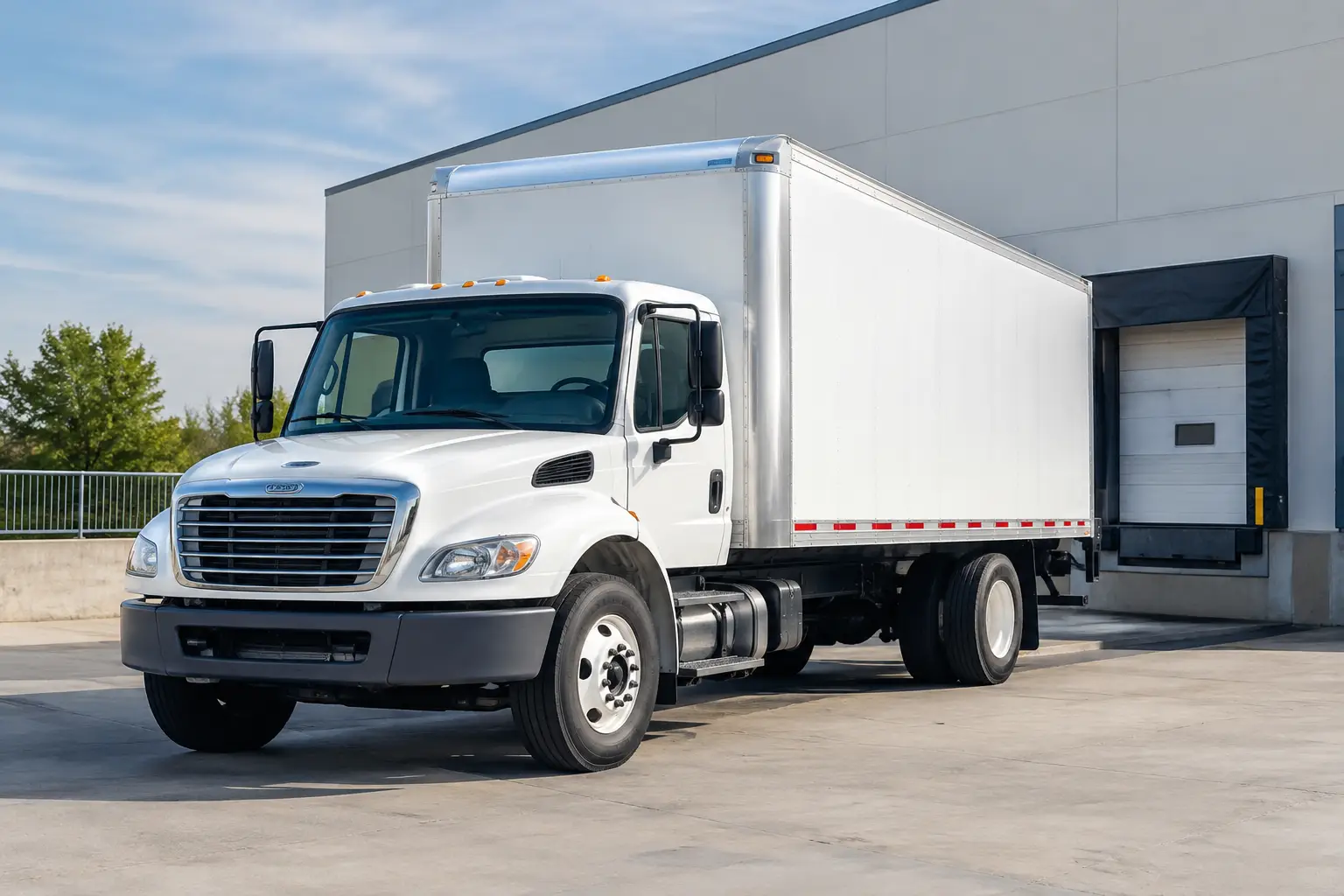
A straight truck has a cargo box permanently attached to its cab and chassis. Unlike a tractor-trailer, it does not have a separate trailer. Common configurations include cube vans, 5-ton trucks, and larger box trucks equipped with liftgates, pallet jacks, and other delivery equipment.
This design makes straight trucks easier to position at smaller facilities, tighter commercial areas, and sites with limited turning space. For shippers, the value is usually not maximum capacity. It is controlled delivery access. A straight truck can carry meaningful freight volume while remaining better suited to congested streets, restricted parking areas, and receivers that cannot accommodate a full-size trailer.
Payload and cubic capacity vary by equipment type, so shipment planning still matters. Weight, pallet count, freight dimensions, delivery equipment, and site access should all be reviewed before choosing a straight truck.
When Should Businesses Use Straight Trucks?
Businesses should use straight trucks when delivery conditions require more flexibility than a standard tractor-trailer can provide. This is especially common when freight is moving within a regional market, requires final-mile service, or must be delivered directly to a receiver without dock access.
Final-mile deliveries without a loading dock
Many commercial receivers do not have a raised dock. Retail stores, medical offices, restaurants, schools, construction sites, small warehouses, and independent distributors may receive freight at ground level. A straight truck with a liftgate can lower palletized freight safely to the ground, while a pallet jack supports movement to the receiving area where conditions allow.
This avoids a common delivery failure: dispatching a standard dry van to a location that cannot unload it. The result may be a rejected load, detention, redelivery costs, or a customer waiting longer for inventory or equipment. When dock-free delivery is known in advance, specifying liftgate-equipped straight truck service is a direct way to protect the delivery plan.
Deliveries into dense urban and restricted-access locations
Large trailers can face limits in downtown areas, older industrial districts, shopping centers, and mixed-use commercial zones. Tight turns, low-clearance risks, delivery-hour restrictions, and limited staging space all affect whether equipment can reach the consignee.
Straight trucks offer better maneuverability for these environments. This is valuable for businesses delivering throughout major markets such as Toronto, Mississauga, Hamilton, or dense U.S. metro areas where delivery access can be as important as transit time. A smaller vehicle does not eliminate every site constraint, but it can substantially reduce the risk of access-related delays.
Regional shipments that do not need a full trailer
A dedicated tractor-trailer may be unnecessary when a shipment is too large for parcel or courier service but too small to justify a full truckload. Straight trucks can be an efficient fit for regional freight moving between distribution centers, branches, stores, suppliers, and customer locations.
This applies particularly well to shipments with a defined delivery window, a moderate pallet count, or recurring local and regional volume. The decision should account for both weight and cube. A shipment that looks small by pallet count may still require more space because of oversized cartons, fragile freight, or stacking restrictions.
Time-sensitive and scheduled delivery routes
Straight trucks are often used for planned daily routes, multi-stop deliveries, and dedicated transportation programs. Manufacturers and distributors may need replenishment freight delivered to multiple locations on a predictable schedule. Retailers may require store deliveries during receiving hours. Service organizations may need parts or equipment at customer sites before crews arrive.
In these cases, the benefit comes from control. A dedicated or route-based straight truck program can align pickup times, delivery appointments, equipment features, and driver instructions with the shipper's operating requirements. It also reduces the coordination burden that comes with arranging each move independently.
Freight that requires more careful handling at delivery
Some shipments need more than curbside arrival. Equipment, displays, fixtures, electronics, packaged industrial goods, and sensitive materials may require liftgate service, inside delivery coordination, or appointment-based handling. A straight truck can support a more tailored delivery model than standard terminal freight, particularly where the delivery site needs direct communication and specific unloading instructions.
That said, accessorial requirements must be confirmed before dispatch. A liftgate does not automatically mean inside delivery, placement, assembly, debris removal, or jobsite unloading capability. Clear scope prevents assumptions from becoming delivery exceptions.
Operational Signs a Straight Truck Is the Better Choice
A straight truck deserves consideration when several of these conditions apply:
- The receiver has no dock, forklift, or trailer-friendly unloading area.
- The delivery point has tight access, restricted streets, or limited vehicle staging space.
- Freight must move regionally with a scheduled or appointment-sensitive delivery window.
- The shipment requires liftgate service, pallet-jack assistance, or more hands-on final-mile coordination.
- A shipment is too large for parcel service but does not need a full tractor-trailer.
One condition alone does not always determine the mode. A dock-free delivery, for example, could sometimes be handled by an LTL carrier with liftgate service. The better decision depends on shipment urgency, handling risk, transit requirements, number of stops, and the consequences of a missed appointment.
When a Straight Truck May Not Be the Right Fit
Straight trucks have clear limitations. They generally carry less weight and volume than a full dry van, and their per-unit transportation cost can be higher on longer lanes. For high-volume freight moving long distances between dock-equipped facilities, a full truckload dry van is often the more efficient choice.
They may also be unsuitable for freight that requires open-deck loading, overhead crane access, unusually high weight capacity, or specialized securement. Flatbeds, Conestogas, step decks, and specialized equipment are better suited to many construction, industrial, and oversized shipments.
Cross-border freight requires another level of planning. A straight truck can be appropriate for regional U.S.-Canada deliveries, including final-mile movements after freight reaches a border-area facility. However, customs documentation, commercial invoices, commodity details, clearance timing, and delivery appointments still need to be coordinated correctly. Equipment selection cannot compensate for incomplete border paperwork.
How to Plan a Straight Truck Shipment Correctly
The most reliable straight truck moves begin with accurate shipment details. Provide total weight, pallet dimensions, stackability, freight class where applicable, pickup and delivery hours, and any appointment requirements. If the site has limited access, describe it specifically: alley delivery, low clearance, downtown restriction, residential-style entrance, construction site, or no dock.
Delivery requirements should be equally clear. State whether a liftgate is needed, whether the receiver has a forklift, whether the driver must call ahead, and whether the freight must be moved beyond the curb. Photos or site notes can be useful for unusual locations, especially when valuable or sensitive freight is involved.
For recurring volume, review the lane as a program rather than a series of isolated shipments. Consistent pickup days, defined route territories, standard equipment specifications, and delivery performance reporting can turn straight truck service into a dependable part of the distribution network. Midemide Logistics can coordinate this type of service alongside trailer-based freight, dedicated capacity, and specialized transportation when a shipper's requirements change from lane to lane.
Choose Equipment Around the Delivery Reality
The cheapest equipment option is not always the lowest-cost transportation decision. A trailer that cannot access a site, freight that cannot be unloaded, or a missed delivery window can quickly create costs that exceed the difference in linehaul pricing.
Straight trucks are most effective when they are chosen for a clear operational reason: access, dock-free unloading, final-mile control, regional routing, or scheduled delivery performance. Start with what must happen at the receiving location, then select the equipment that can execute that delivery safely and consistently.